Grade Identification and Standard Differences
Answer-first: 51CrV4 is theEN/ISO designation (Werkstoff 1.8159); 6150 is theAISI/SAE designation (UNS G61500). They are listed as equivalent across major standard systems, but they arenot specification-identical.
The cross-reference is well established in spring steel literature and supplier data. 51CrV4 corresponds toDIN 50CrV4, AISI/SAE 6150, JIS SUP10, BS 735A50, AFNOR 50CV4, and GOST 50KhFA . A Japanese spring engineering source confirms that SUP10’s equivalent materials includeAISI 6150 and DIN 50CrV4, with ISO 51CrV4 as the ISO counterpart. MatWeb lists AISI 6150 with key words includingJIS SUP10, DE 1.8159, and AFNOR 50 CV 4.
| Standard system | 51CrV4 pathway | 6150 pathway |
|---|---|---|
| EN / YO ASI | EN 10089, EN 10083-3; ISO 51CrV4 | — |
| DE | 51CrV4 / 50CrV4, 1.8159 | DE 1.8159 (equivalent) |
| AISI / SAE | Listed as equivalent to 6150 | AISI 6150 / SAE 6150; UNS G61500 |
| ÉL | SUP10 (equivalent) | SUP10 (equivalent) |
| Licenciatura | 735A50 | 735A50 / En. 47 |
Practical implication for Japanese precision manufacturers: if your drawing calls outSUP10, both 51CrV4 and 6150 can generally be considered, but the mill certificate must be checked againstJIS G 4801 / SUP10 chemistry and hardenability requirements, not simply the EN or AISI grade name. For technical procurement, the safe first question is: “Which standard governs the acceptance criteria—EN 10089, ASTM A689/A29, or JIS G 4801?” The answer determines which grade name is legally correct on the inspection certificate.
Chemical Composition and Alloying Elements
Answer-first: Both grades are~0.5% C, Cr-V low-alloy spring steels. The meaningful differences are in themanganese and vanadium windows: 51CrV4 permits a wider Mn range and a broader V range, while 6150 sets aV minimum of 0.15% and a narrower Mn window.
| Elemento (WT%) | 51CrV4 (EN 10089 / 1.8159) | 6150 (AISI/SAE / UNS G61500) |
|---|---|---|
| C | 0.47–0.55 | 0.48–0.53 |
| Y | ≤ 0.40 | 0.15–0.30 / 0.35 |
| Minnesota | 0.70–1.10 | 0.70–0.90 |
| PAG | ≤ 0.025 | ≤ 0.035 |
| S | ≤ 0.025 | ≤ 0.040 |
| cr | 0.90–1.20 | 0.80–1.10 |
| V | 0.10–0.25 | ≥ 0.15 |
What the chemistry differences mean in practice:
- Mn window. 51CrV4 allows Mn up to 1.10%, versus 0.90% for 6150. Higher Mn increases hardenability and strengthens the ferrite matrix, but can also shift the martensite start temperature and influence distortion in precision strip parts. For thin-section precision components where dimensional stability after heat treatment is critical, a 6150-narrow-Mn heat may offer a more predictable response; for heavier sections, el wider 51CrV4 Mn allowance gives the mill more room to meet hardenability without adding other alloys.
- V minimum. 6150 requires V ≥ 0.15%, while 51CrV4 permits as low as 0.10%. Vanadium refines austenite grain size and contributes to secondary hardening during tempering. At the 0.10% V floor of 51CrV4, grain-coarsening resistance is slightly lower than at 6150’s 0.15% floor. In applications involving high austenitizing temperatures or long furnace residence times, el 6150 V floor provides a small but real process window advantage.
- P and S. 51CrV4 imposes tighter P and S limits (0.025% max each) than 6150 (0.035% PAG, 0.040% S). For fatigue-critical elastic parts, lower P and S reduce inclusion-initiated cracking risk; this is a point in favor of 51CrV4 when the mill certificate demonstrates compliance with the tighter EN limits.
Heat Treatment and Mechanical Performance
Answer-first: Both grades are used in thequenched-and-tempered condition. 51CrV4 offers a documentedRp0.2 ≥ 1200 MPa and Rm 1350–1650 MPa after oil quenching and tempering around 450°C, with the ability to reachRm above 1800 MPa at low tempering temperatures (~300°C). 6150 deliversRm ≥ 1274 MPa and Rp0.2 ≥ 1127 MPa at its standard tempering range. The heat-treat response is similar, but51CrV4 has a more extensively published high-strength tempering curve at the upper end.
Representative quenched-and-tempered properties:
| Propiedad | 51CrV4 (oil quench ~850°C + temper ~450°C) | 6150 (oil quench ~845°C + temper ~540°C) |
|---|---|---|
| 0,2 rupias (yield) | ≥ 1200 MPa | ≥ 1127 MPa (spec min); ~1160 MPa typical |
| habitación (tensile) | 1350–1650 MPa | ≥ 1274 MPa (spec min); ~1200 MPa typical at 540°C temper |
| Elongation A | ≥ 6% | ≥ 10% (spec); 14.5% typical |
| Reduction of area Z | ≥ 30% | ≥ 40% (spec) |
| Dureza | ~ 40–45 HRC equivalent at 450°C temper (from tempering curve) | ~ 39 HRC at 540°C temper |
Tempering response. A 2025 study on 51CrV4 leaf spring steel showed that at300°C tempering, ultimate tensile strength can exceed1800 N/mm²; strength decreases steadily as tempering temperature rises toward 525°C, where impact energy becomes satisfactory across sub-zero and elevated test temperatures . The same study attributed 51CrV4’s hardness advantage over 55Cr3 to theCr and V precipitation-strengthening and hardenability contributions—the same alloying logic that governs 6150.
Selection implication: if your design requiresRm above ~1600 MPa with a documented tempering curve, 51CrV4 has broader published data support. If your heat-treat specification is written around6150’s conventional 500°C ± 50°C temper and the required strength is in the1274–1450 MPa banda, 6150 is fully adequate and widely qualified in automotive supply chains.
Component Design and Manufacturing Requirements
Answer-first: The grade decision is often less about the steel name and more aboutthe form, tolerancia, and downstream process—especially for Japanese precision manufacturers working withcold-rolled or tempered spring steel strip.
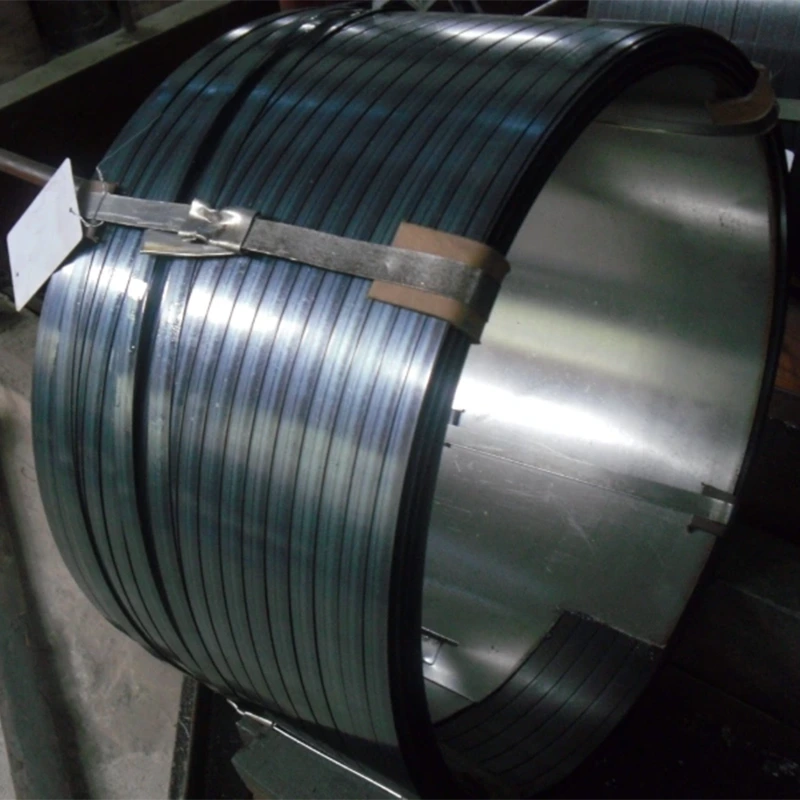
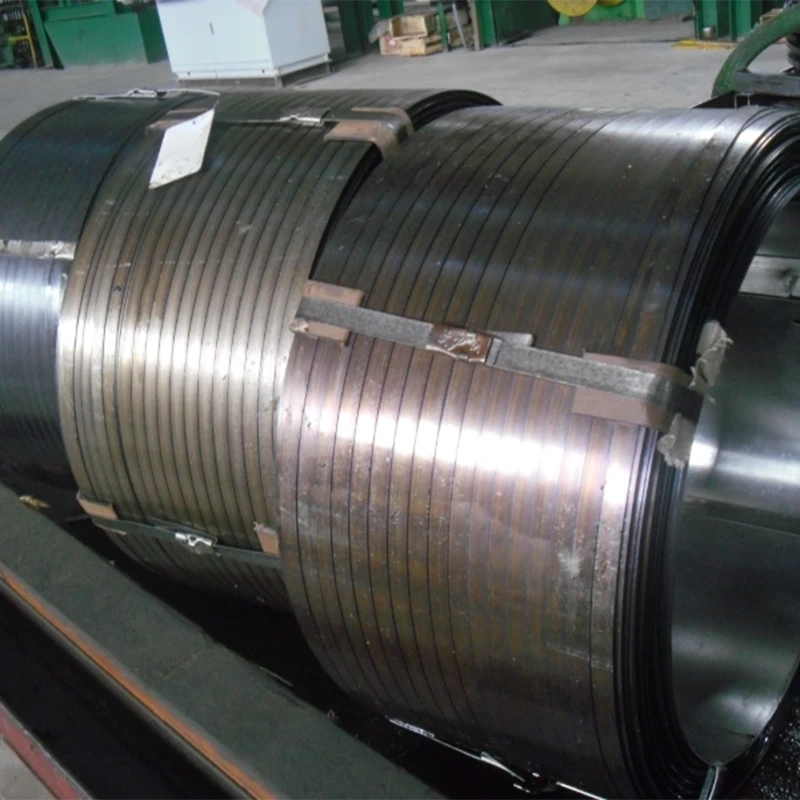
51CrV4 is commonly supplied ascold-rolled wide strip and precision strip, with annealed or球化退火 conditions designed forestampado, formando, and blanking. Patent and mill data show that properly球化退火 51CrV4 strip can achieveHRB 80–90, tensile strength 510–680 MPa in the annealed condition, and spheroidization ≥ 95%, specifically to supportsuperior stamping and deformation processing. This makes 51CrV4 strip a natural fit forhigh-volume progressive die parts, disc springs, and precision elastic components where consistent formability before final heat treatment is essential.
6150 is strongly associated withbar, rod, and wire forhot-formed or machined springs, así comooil-tempered wire. MatWeb lists 6150 applications includingautomotive leaf springs, resortes de válvula, piston rods, pump parts, and spline shafts—components that are often produced from bar stock and heat-treated after forming rather than from precision strip.
For the target audience—Japanese precision manufacturers and automotive elastic part producers—the strip-form question is decisive:
- If the part is blanked or stamped from strip and then heat-treated, specify the grade based on the strip supplier’s capability: 51CrV4 precision strip with controlled球化退火 is the more common route in the EN/ISO supply chain; 6150 banda is available but the JIS SUP10 strip route may be more directly aligned with Japanese OEM approved-supplier lists.
- If the part is coiled from wire or machined from bar, both grades are available in those forms, and the choice returns to chemistry and hardenability windows.
- Distortion and dimensional stability after quenching are often more sensitive to strip thickness uniformity, residual stress from rolling, and heat-treat fixture design than to the 51CrV4-versus-6150 distinction. A technical procurement conversation should include thickness tolerance, camber, and edge condition alongside the grade name.
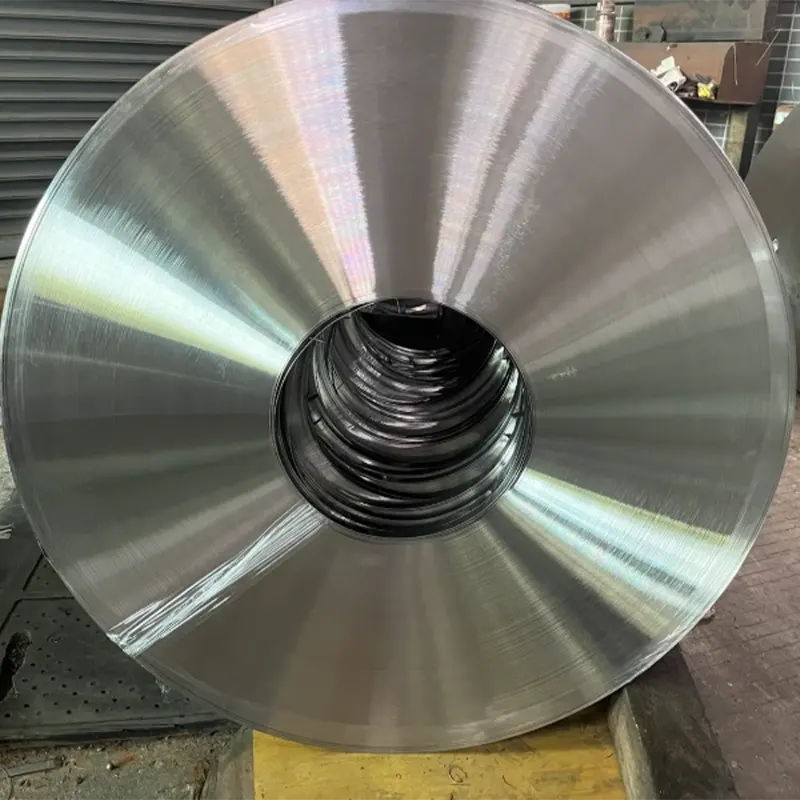
Product fit: P02 Alloy Spring Steel Strip is produced to serve exactly this strip-form precision segment—available in51CrV4 and 6150/SUP10-equivalent chemistries, with controlled annealed/球化退火 conditions for stamping and forming. →P02 Alloy Spring Steel Strip
Material Selection Checklist
Use this checklist as adecision sequence rather than a grade-name comparison. The first “yes” that locks a standard or a process route usually resolves the grade question.
Paso 1 — What standard governs acceptance?
- □ Drawing calls out EN 10089 / 51CrV4: use 51CrV4 certificate, verify tighter P/S limits.
- □ Drawing calls out ASTM / SAE 6150: use 6150 certificate, verify V ≥ 0.15%.
- □ Drawing calls out JIS SUP10: either grade may be offered, but the mill certificate must show SUP10 chemistry and hardenability compliance; confirm with the Japanese OEM or tier-1 approval list.
Paso 2 — What is the delivery form?
- □ Precision strip for stamping/blanking → prioritize 51CrV4 or SUP10 strip with documented球化退火 and HRB ≤ 90 / spheroidization ≥ 95% if formability is critical.
- □ Bar, rod, or wire for hot forming / machining → both grades are available; confirm diameter and hardenability band.
- □ Oil-tempered wire → confirm the temper condition and whether the grade is supplied as 51CrV4 or 6150 equivalent.
Paso 3 — What is the strength and tempering target?
- □ Rm > 1600 MPa with low-temperature temper → 51CrV4 has the more extensively published tempering response in this range.
- □ Rm 1274–1450 MPa, conventional 500°C temper → 6150 is fully adequate and broadly qualified.
- □ Fatigue-critical with tight inclusion control → favor the grade/heat with P ≤ 0.025% and S ≤ 0.025% (51CrV4 EN limits), supported by inclusion rating per DIN 50602 or EN 10247.
Paso 4 — What are the section size and hardenability requirements?
- □ Thin strip (< 3 milímetros) → hardenability differences between the grades are less dominant; focus on chemistry control and distortion.
- □ Thicker sections or large disc springs → compare Jominy hardenability bands for the specific mill heat; 51CrV4’s wider Mn window may allow the mill to meet the band more comfortably, but always verify the actual certificate.
Paso 5 — What is the supply-chain reality?
- □ Japanese OEM / tier-1 approval → confirm whether the approved material is listed as SUP10, 51CrV4, o 6150; substituting one grade name for another without approval can create PPAP/audit issues even if the chemistry is equivalent.
- □ Lead time and minimum order quantity → precision strip availability by grade and thickness often drives the final decision more than a 0.05% V difference.
Frequently Asked Questions
Q1: Is 51CrV4 the same as 6150?
A: They arecross-equivalent chromium-vanadium spring steels: 51CrV4 is the EN/ISO designation (1.8159), 6150 is the AISI/SAE designation, yJIS SUP10 is the Japanese equivalent. They are not specification-identical—manganese, vanadio, and phosphorus/sulfur limits differ—but they are used interchangeably in many quenched-and-tempered spring applications when the governing standard permits.
Q2: Which grade should a Japanese precision manufacturer use for SUP10 drawings?
A: Either 51CrV4 or 6150 may be technically suitable, but themill certificate must demonstrate JIS SUP10 compliance. For strip-form stamping parts, 51CrV4 precision strip with controlled球化退火 is a common route; the final choice should be confirmed against the OEM or tier-1 approved material list.
Q3: Can 51CrV4 replace 6150 without requalification?
A: In many non-safety-critical or non-OEM-controlled applications, Sí, because the grades are cross-equivalent. Enautomotive safety parts, PPAP-controlled components, or Japanese OEM supply chains, substitution usually requirescustomer approval and possibly partial requalification (dureza, microstructure, fatigue) even when the chemistry is equivalent.
Q4: Which grade is better for high-strength springs above 1600 MPa?
A: 51CrV4 has a more extensively published tempering curve at the high-strength end, with documented strengths above1800 MPa at ~300°C tempering. 6150 can also be tempered to high strength, but the published data and heat-treat specifications in many supply chains are anchored around the1274–1450 MPa range.
Q5: What strip condition should I specify for stamping?
A: Specify球化退火 (spheroidize-annealed) condition withspheroidization ≥ 95%, HRB 80–90, and tensile strength in the 510–680 MPa range for 51CrV4-type strip, and confirm the equivalent annealed condition for 6150/SUP10 strip. This condition is specifically designed to supportstamping and deformation processing before final quenching and tempering.