Quick Selection Matrix: Which Grade for Which Automotive Part
| Part Type / Service Condition | Recommended Grade | Core Logic | Key Constraint |
|---|---|---|---|
| Clips, shims, spring elements (require high yield strength + controlled springback after forming) | SUS301 | Strong cold-working hardening response; achieves high strength and hardness gradient in the cold-rolled condition | Corrosion resistance drops in chloride-containing environments; not for severe corrosive service |
| Brackets, corrosion-resistant structural parts, deep-drawn/bent components | SUS304 | Austenitic structure; balanced formability and corrosion resistance; ample ductility in the annealed condition | Lower strength than cold-worked 301; intermediate annealing may be required depending on forming severity |
| Parts requiring high hardness + wear resistance after heat treatment (valve reeds, scraper blades, spring contact parts, etc.) | SUS420J2 | Martensitic hardenability; hardness from quenching and tempering, not from cold rolling | Corrosion resistance is “moderate,” dependent on chromium content and surface finish; annealed and hardened-tempered conditions differ drastically in performance |
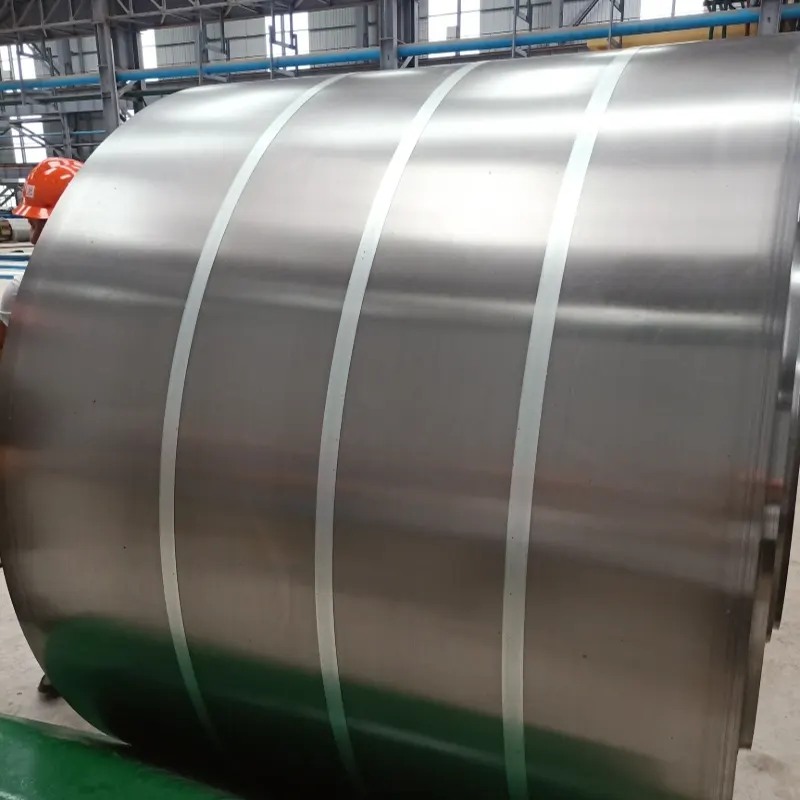
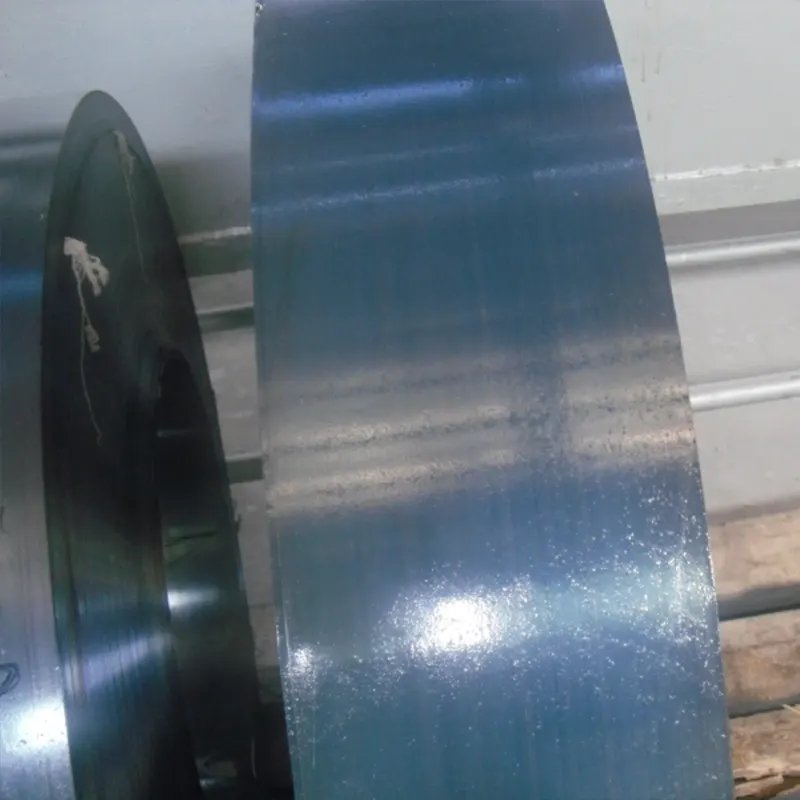
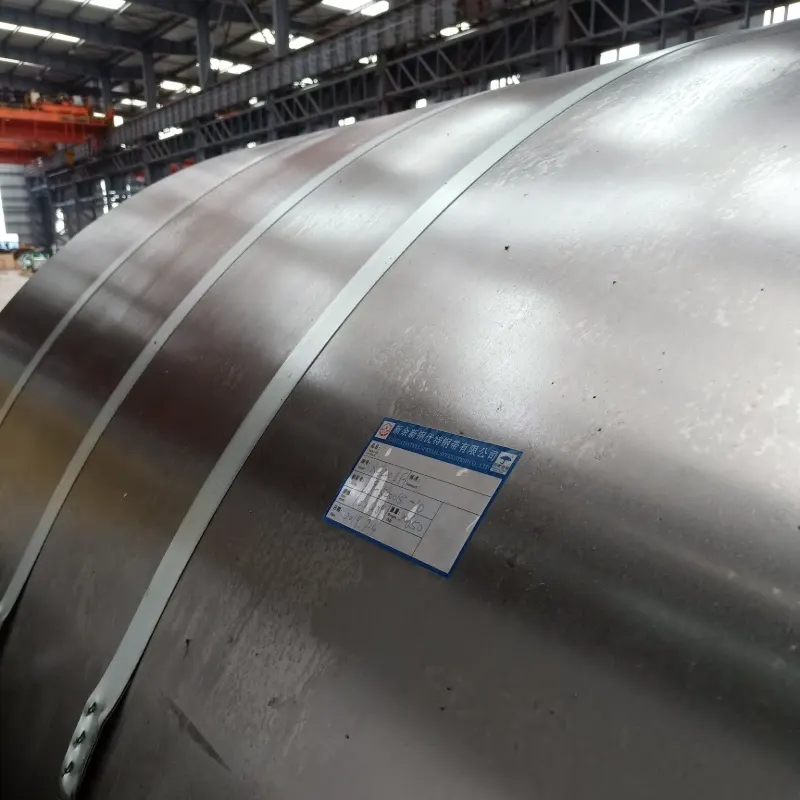
SUS301 — Cold-Worked Austenitic Stainless Steel Strip
Typical application positioning: Clips, shims, elastic support parts, washer-type components, and other scenarios requiring relatively high strength directly in the cold-rolled condition while retaining some formability.
Key specification dimensions (available conditions):
| Dimensión | Typical Range / Data | Engineering Implication |
|---|---|---|
| Dureza (cold-worked) | Suave, 1/2h, 3/4H up to full hard; max hardness in the HV600 range | Hardness increases with cold-rolling reduction; temper and forming sequence must be locked together during selection |
| Resistencia a la tracción (cold-worked precision strip, reference data) | In some precision applications, Rm ≥ 1365 MPa, Rp ≥ 1165 MPa | Data from specific precision-strip process scenarios; not a guaranteed value for all supply conditions. |
| Thickness range | Stainless strip: 0.1–2 mm; width 10–600 mm | Thin-gauge segment is the main competitive zone for 301 in clip/shim applications |
| Acabado superficial | 2B, licenciado en Letras, NO.4, HL, Mirror available | BA finish offers process value where downstream polishing is to be reduced or friction coefficient controlled |
SUS301 corrosion resistance decreases significantly in chloride-containing environments (road salt, coastal atmosphere, certain cleaning agent residues). It is not suitable for severe corrosive service without additional protection. For chassis or exposed automotive parts, the corrosion environment must be included in validation — grade selection should not be based on strength alone.
SUS304 — Austenitic Corrosion-Resistant Formable Stainless Steel Strip
Typical application positioning: Brackets, thin-wall structural parts, deep-drawn/bent components, non-high-temperature load-bearing parts near exhaust systems, and other automotive components where corrosion resistance, formability, and weldability are primary constraints.
Key specification dimensions:
| Dimensión | Typical Data / Rango | Notes |
|---|---|---|
| Annealed tensile strength | Approx. 480–650 MPa (varies by standard and product form) | Forming process design should be based on annealed ductility; strength rises after cold work but ductility drops |
| Annealed yield strength | ≥ 205 MPa | Low yield-to-tensile ratio favors deep drawing and complex bending |
| Dureza (recocido + 2B/BA) | Approx. 150–200 HV range | Surface finish and hardness jointly affect subsequent stamping springback and die wear |
| Espesor / Ancho | Thickness 0.1–2 mm; width 10–600 mm | Shares production line capability with SUS301, facilitating multi-grade combined purchasing |
| Acabado superficial | 2B, licenciado en Letras, NO.4, HL, etc.. | 2B is the common base surface for automotive structural/bracket parts; BA suits applications requiring surface cleanliness or paint adhesion |
SUS304 offers good corrosion resistance in room-temperature atmosphere and most industrial environments, but in chloride stress-corrosion cracking sensitive environments or high-temperature sensitization ranges (p.ej., weld heat-affected zones in long-term service), re-evaluation with low-carbon variants (304L) or stabilized grades is required.
SUS420J2 (GB 4Cr13, AISI 420 / DE 1.2083) — Hardened and Tempered Martensitic Stainless Steel Strip
Typical application positioning: Automotive parts requiring high hardness and wear resistance obtained through final heat treatment — valve reeds, scraper blades, spring contact parts, wear-resistant shims, and other thin-section moving parts that cannot meet hardness requirements in the cold-rolled condition.
Key specification dimensions:
| Dimensión | Data / Condición | Engineering Implication |
|---|---|---|
| Annealed hardness | ≤ 235 media pensión (common supply condition) | Annealed condition is intended for forming, blanking, and bending; does not provide final service hardness |
| Hardened and tempered hardness | Up to 48–53 HRC (low-temperature tempering), corresponding to tensile strength approx. ≥1400 MPa | Hardness comes from heat treatment, not cold rolling; order must specify “annealed supply” or “hardened and tempered supply” |
| Full hardness range (commercially available) | 330–610 HV / 33–55 HRC | Different suppliers’ heat treatment windows and tempering temperatures determine final hardness; selection should back-calculate supply condition from part drawing hardness requirements |
| Espesor / Ancho | Ronsco line covers 0.1–2 mm thickness, width 10–600 mm | Thin-gauge 420J2 is typically applicable to valve reed and scraper blade parts |
| Acabado superficial | licenciado en Letras, 2B, bright/polished, etc.. | Martensitic stainless steel corrosion resistance is sensitive to surface finish; polished surfaces help utilize the passivation capability provided by chromium content |
SUS420J2 corrosion resistance is moderate, significantly lower than austenitic grades such as 304, and the hardened-tempered condition may rust in chloride-containing or wet abrasive environments. When using 420J2 for automotive parts, the following must be validated simultaneously: ① whether hardness after final heat treatment meets wear resistance requirements; ② corrosion behavior under actual contact media (road salt, cleaning agents, lubricant additives); ③ effect of heat treatment distortion on dimensional tolerances.
Thickness Tolerance, Acabado superficial, and Hardness: Three Parameters That Must Be Locked in the Order
In material selection communication for automotive stainless strip, grade is only the starting point. If the following three items are not locked, even a matching grade can lead to batch failures:
1. Tolerancia de grosor. Stainless strip is supplied under general flat-rolled stainless tolerance systems such as ASTM A480/A480M. For narrow-strip precision applications as a reference, cold-rolled strip thickness tolerances typically fall in the ±0.06–±0.10 mm range (varying with thickness interval and width); ASTM A480 specifies tolerances by product form, thickness interval, and width. Automotive clip and valve reed parts are sensitive to thickness consistency — inquiries should provide target thickness + allowable tolerance band + measurement locations for critical dimensions, not just nominal thickness.
2. Acabado superficial. 2B, licenciado en Letras, NO.4, HL, and Mirror are all available in Ronsco strip products. For automotive parts, surface finish selection is not just about appearance: BA finish reduces downstream polishing requirements, 2B is the general base for stamped/formed parts, y polished surfaces directly influence the corrosion performance of 420J2. Orders should specify both the surface designation and acceptance criteria (Ra range or standard sample).
3. Dureza / temper condition. 301 is identified by cold-rolled temper (1/2h, 3/4h, FH, etc.), 304 is typically supplied annealed, and 420J2 is distinguished as annealed or hardened-tempered. Under the same grade, “annealed” and “hard/hardened-tempered” conditions can differ in mechanical properties by several times. Contracts and quality certificates should state the supply condition, not just the grade.
Application Validation Precondition Statement
Before using any grade for automotive parts, the following should be completed:
-
Application condition definition: Load type (static/fatigue/impact), contact media (salt spray, cleaning agents, oils), temperature range;
-
Forming and heat treatment process validation: Effect of cold-work reduction on 301 hardness/springback, residual stress in 304 after deep drawing, distortion and hardness uniformity of 420J2 after quenching and tempering;
-
Corrosion resistance validation: Salt spray, cyclic corrosion, or media immersion testing under the part’s actual surface condition and service environment — do not rely solely on general grade corrosion descriptions;
-
Batch consistency confirmation: Whether fluctuations in hardness, espesor, and surface finish across consecutive batches fall within part tolerances and process windows.
FAQ
Q1: Can SUS301, SUS304, and SUS420J2 be directly interchanged for the same automotive part?
No. The strengthening mechanisms differ: SUS301 relies on cold-work hardening, SUS304 is selected for annealed formability plus corrosion resistance, and SUS420J2 derives hardness from quenching and tempering. Interchange requires re-validation of the forming sequence, heat treatment route, corrosion performance, and fatigue behavior — substitution cannot be based merely on “all being stainless steel.”
Q2: What is the maximum hardness you can supply for SUS301 strip?
SUS301 can achieve full-hard tempers through cold rolling, with publicly reported hardness reaching the HV600 range; precision-strip reference tensile strength can reach Rm ≥ 1365 MPa. Sin embargo, actual supply hardness depends on the ordered temper, espesor, and width. Please provide the target hardness range or part drawing requirements at inquiry.
Q3: Is SUS420J2 supplied annealed or hardened and tempered?
Both are possible, depending on order agreement. Annealed hardness is typically ≤235 HB, suitable for blanking and forming; hardened and tempered condition can reach 48–53 HRC (or the commercial supply range of 33–55 HRC). The supply condition must be specified at order placement, because the processing route and final part performance differ completely between the two conditions.
Q4: What thickness tolerance standard applies, and what can be achieved?
Cold-rolled strip in common thickness ranges typically falls in the ±0.06–±0.10 mm range, depending on thickness, ancho, and order agreement. For precision strip requiring tighter-than-standard tolerances, please mark “critical dimensions” and measurement method in the inquiry; Ronsco will confirm the executable range based on line capability.
Q5: Can you supply automotive strip under IATF 16949?
If your project requires the supply chain to hold IATF 16949 certification, please explicitly state this in the RFQ.Cgoodsaws will confirm the supporting system documents and inspection scheme based on the specific grade, mill source, and order volume — it is not assumed that all product lines are covered under the same certification scope.