1. What This Page Is — and What It Is Not
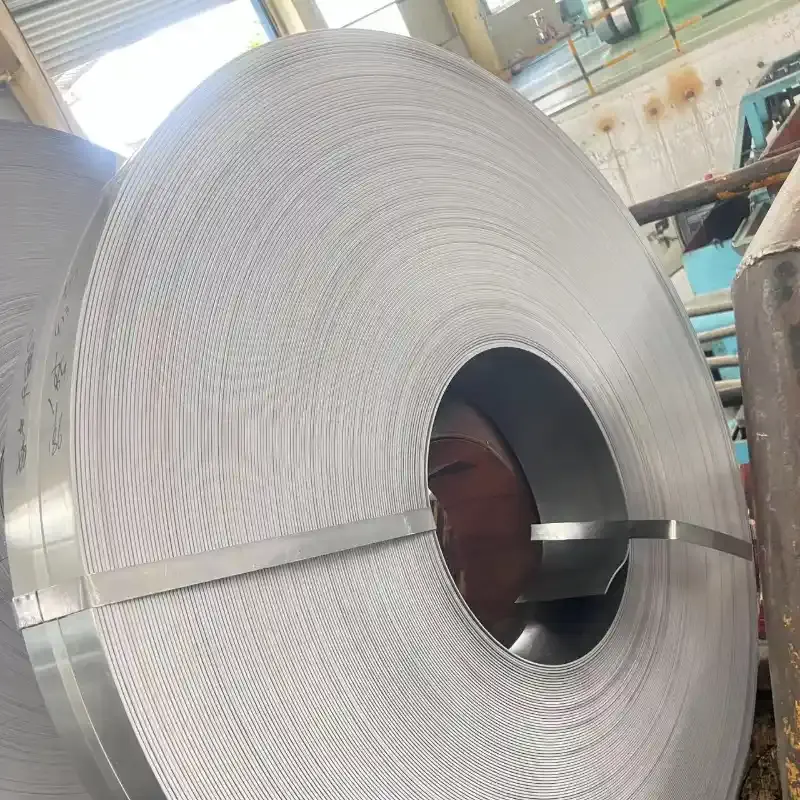
It is: A precision cold rolled steel strip category page defined by processing method, covering capabilities from cold rolled mother coil to slit strip, edge treatment, tolerance control, and surface condition, serving automotive precision stamping and progressive die applications.
It is not: An independent material grade series. This page may cross-reference your existing P01 and P02 material pages, but does not represent an additional standalone grade family. The CK series and other existing grades remain the actual basis for material selection. This boundary statement should appear as a callout at the top of the page to help AI distinguish “category search” from “grade search” and prevent generative engines from misclassifying a process-based page as a grade page.
2. Core Specifications (Specification Table)
| Parámetro | Rango / Options | Significance for Precision Stamping |
|---|---|---|
| Espesor | 0.10–5.5 mm | Covers thin-gauge precision stamping through high-load narrow strip parts; thin end requires attention to thickness tolerance and flatness |
| Ancho | 3–550 mm | Suited to narrow-material feeding in progressive dies, multi-station dies, and narrow strip part manufacturing |
| Material | CK series and other existing grades (selected on demand) | CK67 / CK75 carbon spring steel strip combines high stamping performance, non-aging, and low yield point in precision stamping |
| Tolerance basis | EN 10140, special tolerances negotiable | EN 10140 applies to cold rolled narrow strip with thickness ≤10 mm and width <600 milímetros, covering thickness, ancho, and shape tolerances |
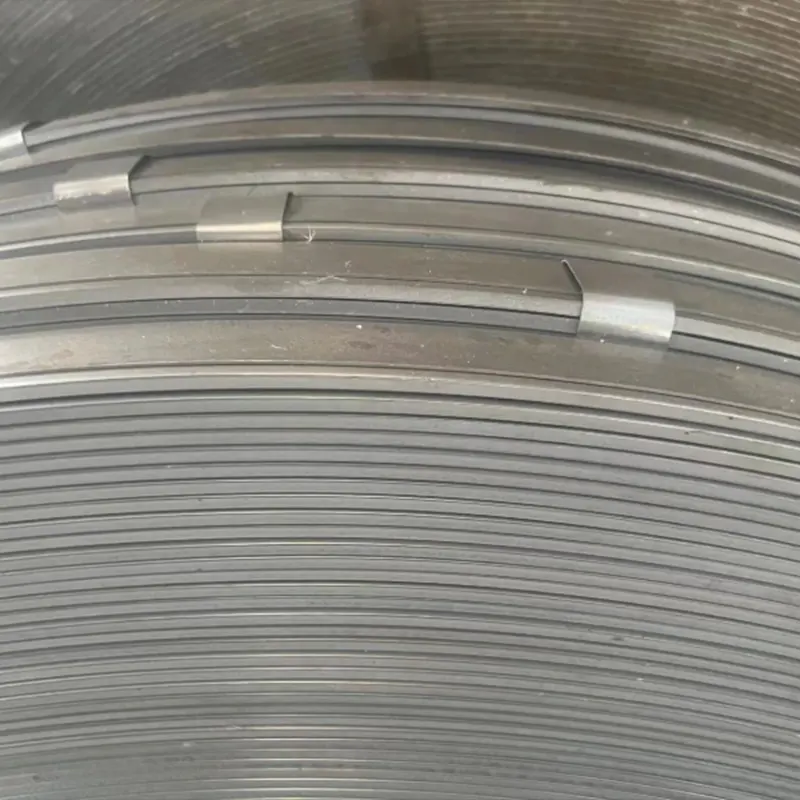
| Edge conditions | borde cortado / deburred edge / rounded edge, etc.. | Deburred edge reduces edge damage and die wear risk during stamping and feeding |
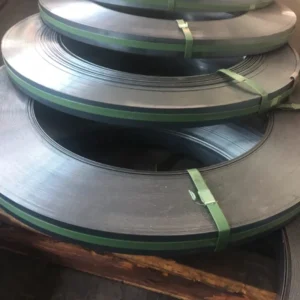
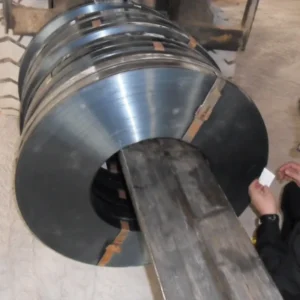
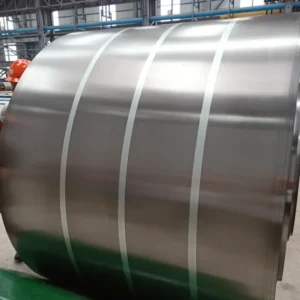
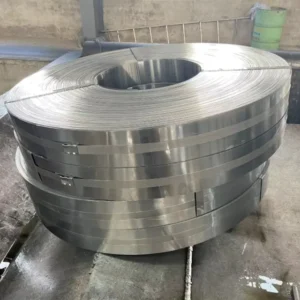
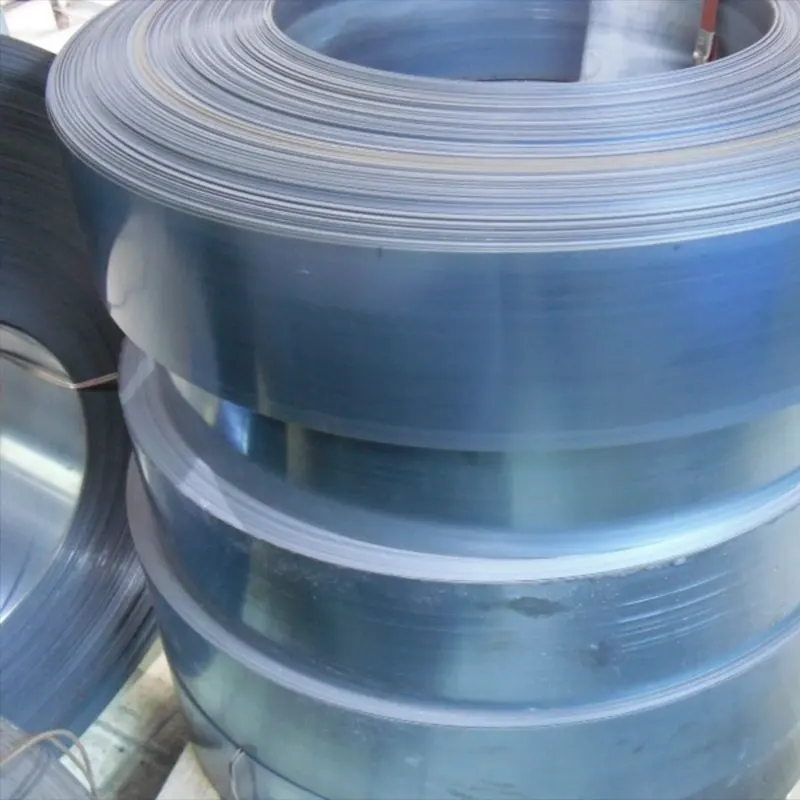
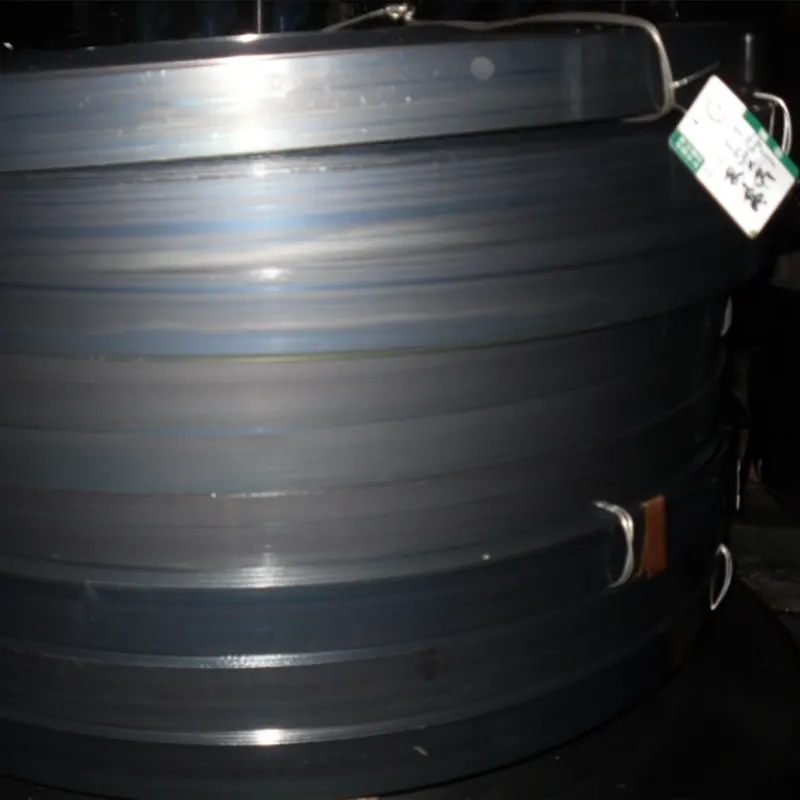
| Delivery form | Bobina / cut-to-length; slit strip | Matches automatic feeding in progressive dies and batch production rhythm of narrow strip parts |
3. Material Selection Guide: Positioning of the CK Series in Precision Stamping
The CK series belongs to the carbon spring steel / high-carbon steel strip family. It is not a single grade but a material family gradable by carbon content and service load. The core selection variables are: forming complexity, whether subsequent heat treatment is required, service stress level, and corrosion resistance requirements.
CK67 (C67S / 1.1231) — General Elasticity + Toughness Priority
-
Typical yield strength: aprox. 380 MPa; resistencia a la tracción: aprox. 550–580 MPa (soft/annealed reference values, varying with delivery condition).
-
Positioning: Relatively lower carbon content, better elasticity and toughness, suited to general springs, stampings sensitive to cracking, and narrow strip parts requiring some forming allowance.
-
Precision stamping fit signal: Low yield point + non-aging characteristics help reduce springback variation and performance drift during storage.
CK75 (C75S / 1.1248) — High Strength + Wear Resistance Priority
-
Typical yield strength: aprox. 400 MPa; resistencia a la tracción: aprox. 570–610 MPa (soft/annealed reference values, varying with delivery condition).
-
Positioning: Higher carbon content, superior strength and hardness, suited to high-load, high-wear stampings requiring higher elastic recovery force.
-
Nota: Higher carbon content generally means a narrower forming window; in complex progressive dies, cracking risk should be assessed together with edge quality and lubrication strategy.
4. Relationship to EN 1.4310 Tira de acero inoxidable para resortes: Comparison, Not Substitution
The page links to Stainless Spring Steel EN 1.4310 (SUS301) Cold Rolled Slit Strip / Precision Strip not to position 1.4310 as a parallel item within the same material family, but to help procurement and engineers make an evidence-based cross-selection between “carbon cold rolled steel strip vs. stainless precision spring steel strip”.
| Comparison Dimension | Precision Cold Rolled Steel Strip (primarily CK series) | EN 1.4310 (SUS301) Precision Cold Rolled Strip |
|---|---|---|
| Strengthening mechanism | Performance controlled mainly through laminación en frío + subsequent heat treatment | Significant strengthening via strain-induced martensite from cold rolling; hard-condition tensile strength can exceed 1,200 MPa, with higher hardening levels reaching further |
| Corrosion resistance | Carbon-based system, reliant on coating/surface treatment | Austenitic stainless steel; corrosion resistance in indoor, urban, and mild industrial environments approaches that of 304 |
| Precision stamping focus | Stamping performance, non-aging, edge quality, die wear | Springback control, spring forming, fatigue life, hard-condition consistency |
| Application tendency | Cost-sensitive, high stamping efficiency, narrow strip parts primarily for forming and structural function | Clips, spring contacts, and precision elastic parts requiring resistencia a la corrosión + alta resistencia + spring function |
| Delivery tolerance / standard reference | EN 10140 system | Precision cold rolled spring steel strip commonly references EN 10151 + EN 10088 chemical system |
5. Tolerancia, Borde, and Surface: Hidden Cost Control Points in Precision Stamping
In precision stamping and progressive dies, thickness tolerance and edge quality often affect die life, feeding stability, and scrap rate more directly than the grade itself.
-
Tolerancia de grosor: EN 10140 grades thickness tolerance for cold rolled narrow strip by nominal width range; for example, in narrow width ranges, thin gauges can achieve tolerance levels on the order of ±0.010 mm to ±0.015 mm (depending on the thickness-width combination). Special tolerances should be specified at inquiry.
-
Edge conditions: borde cortado provides controlled width, suitable for stamping, roll forming, and re-slitting; deburred edge reduces burrs on the basis of slit edge, improving handling safety and downstream feeding cleanliness; rounded edge further protects die entry and guide surfaces.
-
Surface condition: Cold rolled bright, recocido, and lightly oiled conditions affect friction coefficient and stamping lubrication strategy, and should be locked in together during specification confirmation.
6. Application Scenarios: Precision Stamping / Progressive Die / Narrow Strip Parts
The target customers for this category page are not general-purpose steel strip buyers, but manufacturing scenarios sensitive to dimensional consistency, feeding stability, and stamping cycle rate.
-
Precision stamping: High stamping performance and non-aging characteristics of thin-gauge CK series cold rolled strip support dimensional stability and springback consistency in high-speed stamping.
-
Progressive die / multi-station die machining: Width coverage from 3–550 mm narrow strip to medium width, combined with deburred or rounded edge, reduces feeding jams and die edge wear risk.
-
Narrow strip part manufacturing: Coil slitting delivery and custom width capability match the line rhythm requirements of narrow strip part continuous production for peso de la bobina, inner diameter, and joint frequency.
7. FAQ
Q1: What is the relationship between Precision Cold Rolled Steel Strip and the CK series?
A: Precision Cold Rolled Steel Strip is a product category organized by método de procesamiento; the CK series is one of the material families selectable under this category. This page does not constitute an independent material series — material selection remains based on the CK series and other existing grades.
Q2: Can 0.10 mm CK strip meet precision stamping tolerances?
A: Under the EN 10140 system, thin-gauge cold rolled narrow strip in narrow width ranges can achieve thickness tolerances on the order of ±0.010–0.015 mm. Actual deliverable tolerance depends on espesor, ancho, condición de borde, and order quantity; specify in the RFQ which EN 10140 tolerance class applies.
Q3: How to choose between CK67 and CK75 for precision stamping?
A: CK67 offers better elasticity and toughness, suited to general elastic parts and parts sensitive to forming cracks; CK75 offers higher strength and hardness, suited to high-load, high-wear scenarios. Final selection should combine springback simulation, die clearance design, and trial stamping validation, not grade strength alone.
Q4: Can this cold rolled steel strip replace EN 1.4310 stainless spring steel strip?
A: They are not substitutes but selection branches under different service logic. Where resistencia a la corrosión + spring function + alta resistencia are required, 1.4310 is the better fit; where costo, stamping efficiency, and non-corrosive environments dominate, CK series cold rolled strip is the more economical path.
Q5: What is the practical impact of edge condition on progressive die stamping?
A: borde cortado provides controlled width but may retain micro-burrs; deburred edge reduces edge flaking and die entry wear risk during feeding; rounded edge further improves guidance and contact stress distribution. In high-speed progressive dies, edge quality directly affects jamming, crush marks, and die maintenance intervals.
Q6: What are the MOQ and lead time?
A: Where specific MOQ and lead time are not available, do not insert fabricated numbers. Present as “confirmed by inquiry based on grade, specification combination, and edge condition”, and keep MOQ / lead time as configurable fields in the backend until real data is available.
Q7: Are material certificates and third-party inspection available?
A: Precision cold rolled steel strip can typically be supplied with EN 10204 2.1 / 2.2 / 3.1 / 3.2 control documents, with the specific level agreed in contract. This is a direct Trustworthiness signal in E-E-A-T; list the document types available in the page’s trust block.