1. Grade Matrix and Typical Positioning
| Grade | Typical Carbon Content | Cross-Reference | Typical Position in Automotive Components |
|---|---|---|---|
| CK45 | 0.42–0.50% | SAE 1045 / 1.1191 | Structural parts and brackets with moderate strength requirements and a high forming share |
| CK50 | 0.47–0.55% | SAE 1050 / 1.1206 | Tool backing plates and spring plates; hardness after Q+T can reach 25–40 HRC |
| CK55 | 0.52–0.60% | SAE 1055 / 1.1204 | Stamped parts and medium-load clips; C55 is used in automotive springs, washers, clips, and fasteners |
| CK60 | 0.57–0.65% | SAE 1060 | Stamped parts requiring higher strength while retaining some cold-forming margin |
| CK67 | 0.65–0.72% | C67S / SAE 1070 | One of the main European grades for automotive springs and clips, balancing strength and moderate formability |
| CK75 | 0.70–0.80% | C75S / SAE 1075 / 1.1248 | A frequent choice for automotive stamped spring parts and metal clips; 1074/1075 is explicitly recommended for stamped spring components |
| CK80 | 0.75–0.85% | C80S / SAE 1080 | Spring elements and wear parts requiring higher hardness |
| CK95 / CK100 | 0.90–1.00%+ | C95S / C100S / SAE 1095 | High-hardness, high-wear applications; the forming window narrows significantly, and annealed or spheroidize-annealed condition is usually specified to retain formability |
Rule of thumb for grade selection: 0.6–0.7% carbon is suitable for parts that need to be stamped into more complex shapes; 0.8–1.0% is suitable for parts that can tolerate limited forming and pursue maximum hardness and wear resistance. CK75 sits in the middle-to-later part of this empirical curve. It is a common starting point when balancing “stamping feasibility” and “spring/clip load-bearing capacity,” but it is not the default answer. The part drawing and forming process capability must always be confirmed first.
2. Key Specifications: Thickness, Width, Dureté, Delivery Condition, Flatness, Camber, and Edge Quality
2.1 Thickness and Width
Reference industrial supply range for narrow cold-rolled high carbon steel strip: thickness approximately 0.08–5.0 mm, width approximately 2–1250 mm, customizable according to production line and slitting capability. Common thickness for automotive stamped parts and clips is concentrated in the 0.2–3.0 mm range. However, thin specifications have significantly tighter requirements for thickness tolerance, flatness, and edge quality and must be specified separately during inquiry.
2.2 Dureté: Must Be Understood Together with Delivery Condition
Hardness is not an isolated number; it moves over a wide range depending on delivery condition:
-
Annealed condition: Aimed at maximizing formability. CK75 spheroidize-annealed reference hardness is HV ≤ 189 (Waelzholz data); SIQUAL 1248 (CK75) spheroidize-annealed tensile strength is approximately 610 MPa maximum, with yield strength approximately 400 MPa. CK67 annealed hardness can reach HV ≤ 200.
-
Cold-rolled condition: CK67 cold-rolled hardness reference is HV ≤ 315; typical hardness window for cold-rolled high carbon steel strip is in the 21–28 HRC range depending on grade and reduction.
-
Quenched and tempered condition: CK67 Q+T hardness reference is HV 370–580; CK75/C75S can reach HRC 50–55 after heat treatment, with tensile strength ≥1200 MPa and yield strength ≥1000 MPa after quenching and tempering. Grade 75 steel (CK75 benchmark) has untreated hardness HBS ≤ 285, annealed HBS ≤ 241, tensile strength ≥1080 MPa, yield strength ≥880 MPa, and elongation ≥7%.
Key note: High carbon steel strip is usually supplied in annealed/soft condition, lightly rolled intermediate condition, hard-rolled tempered condition (1/2H, 3/4H, FH), or quenched and tempered condition. Hardness must be stated in the order as an HRC range or HV range and confirmed batch by batch on the Mill Test Certificate. Batch-to-batch hardness drift is a common cause of downstream spring failure.
2.3 Flatness and Camber
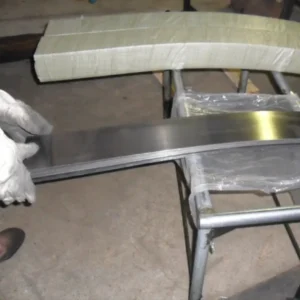
Using typical requirements for quenched and tempered high carbon steel strip under the EN 10132 framework as a reference: longitudinal flatness in cut-to-length strip should not exceed 10 mm/1000 mm along the rolling direction; tighter requirements must be agreed separately in the order. Camber is also graded according to relevant tables in EN 10140 / DANS 10132, and tight tolerances must be explicitly stated in the commercial agreement. For downstream automatic stamping lines or high-speed feeding lines, the impact of flatness and camber on feeding stability is often more direct than thickness tolerance alone.
2.4 Edge Quality and Surface Condition
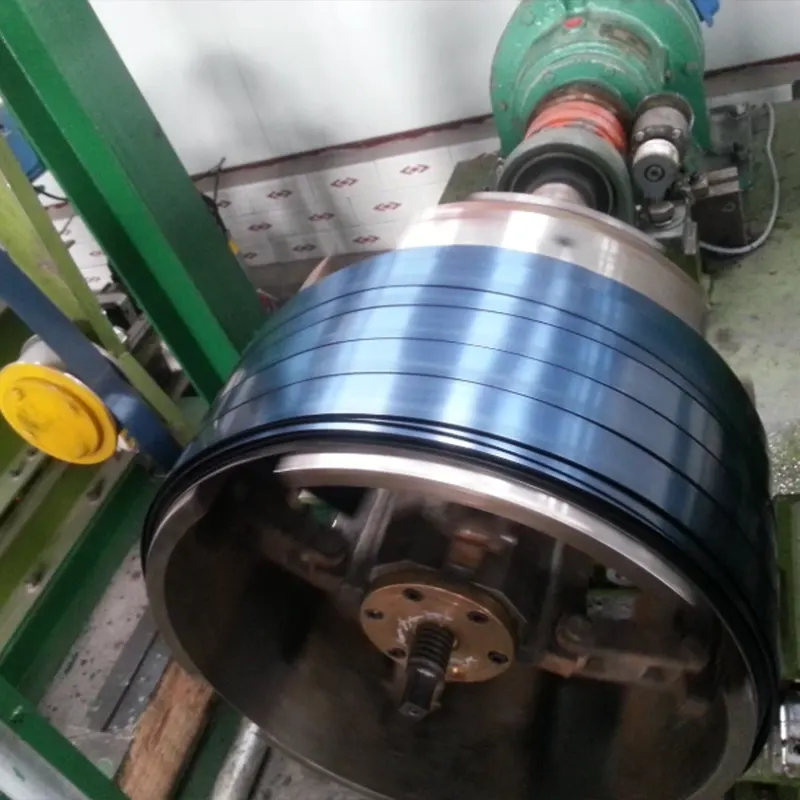
Edge condition (round edge/trimmed edge/sheared edge), edge burr grade, surface roughness (such as Ra ≤ 0.6 μm class or polished condition), temper color (blue/yellow), etc. should be specified separately according to EN 10132 finish classifications or customer drawings. Automotive clips and precision formed parts are sensitive to edge micro-cracks, so edge quality should be an independent acceptance item rather than implicitly covered by the default description “cold-rolled strip.”
3. Delivery Condition: Choose the Condition First, Then Discuss Hardness
The engineering selection logic for high carbon steel strip should be: first determine whether the part is heat-treated before forming or supplied already heat-treated and used directly after forming, then lock the delivery condition and hardness window.
| Delivery Condition | Forming Capability | Reference Hardness Window | Applicable Part Logic |
|---|---|---|---|
| Spheroidize annealed / soft | Highest, suitable for deep drawing and complex bending | CK75 approximately HV ≤ 189 | Complex part shape; stamping followed by quenching and tempering |
| Cold-rolled | Moderate, suitable for moderate deformation | Approximately 21–28 HRC depending on grade; CK67 cold-rolled HV ≤ 315 | Stamped parts requiring some strength while retaining moderate formability |
| Quenched and tempered (Q+T) | Limited, primarily for elasticity/strength | CK75/C75S up to HRC 50–55; CK67 Q+T HV 370–580 | Spring/clip hardness as supplied; formed and directly assembled |
| Hard-rolled tempered (1/2H–FH) | Decreases as temper level increases | Graded by temper level | Parts not heat-treated after stamping but requiring direct spring performance |
Specific note on CK75/SAE 1075: SAE 1075 is often supplied in cold-rolled hard, annealed, quenched and tempered, polished, or blue-tempered condition. The actual forming behavior and final part performance under the same “CK75” label depend on delivery condition and hardness window, not on the grade name alone.
4. Applicable Application Scenarios (with Confirmation Path)
Stamped parts: CK55, CK60, and CK67 in annealed condition are common starting ranges for stamped parts. When part geometry is moderately complex and some strength is still required after stamping, CK67/C75S annealed or lightly rolled condition is worth evaluating first.
Metal clips: C55 and C67S/C75S are explicitly used in clips and fasteners. The core failure modes of clips are usually elastic decay or permanent deformation. Therefore, hardness consistency in the delivery condition, flatness, and edge integrity are more critical than whether the grade has “enough” carbon.
Precision formed parts: The higher the carbon content, the more difficult cold forming becomes and the more pronounced the tendency toward edge cracking. Above approximately 0.9% C, forming becomes demanding; complex shapes should consider annealed or lightly rolled condition rather than direct stamping in hard condition. CK80–CK100 are more suitable for applications with limited forming and priority on high hardness/wear resistance.
Customer design-validated parts: For parts already validated through OEM design verification, a grade change or delivery-condition adjustment constitutes a material change. Mechanical properties, forming process window, and customer specifications should be reconfirmed. Equivalent substitution based only on “similar high carbon steel” is not acceptable. All grade-to-application relationships on this page are selection starting-point references and do not constitute a guarantee of suitability for any specific part.
5. Standards and Acceptance Framework
-
DANS 10132: Technical delivery conditions for cold-rolled narrow steel strip for heat treatment, covering grades, dimensional/shape tolerances, surface conditions, and inspection requirements; DANS 10132-4 applies to quenched and tempered cold-rolled steel strip.
-
DANS 10140: Reference system for dimensional and shape tolerances of cold-rolled narrow steel strip.
-
Grade cross-reference: CK75 / 1.1248 / C75S / SAE 1075 are common corresponding relationships for the same material under different standard systems. Equivalence does not mean free substitution, especially for automotive safety-related parts.
-
Acceptance documents: Mill Test Certificate should be supplied with the goods. Dureté, tensile strength, chemical composition, and dimensional/flatness results must correspond item by item with the order specification.
6. Purchasing and Customization Information (Pre-Inquiry Checklist)
High carbon steel strip is essentially a customized industrial intermediate product made to drawings and specifications, not a catalog standard item. An effective inquiry should provide the following information at one time to obtain comparable quotations:
-
Grade + delivery condition + hardness window: For example, “CK75, quenched and tempered, HRC 46–48” or “CK67, spheroidize annealed, HV ≤ 200.”
-
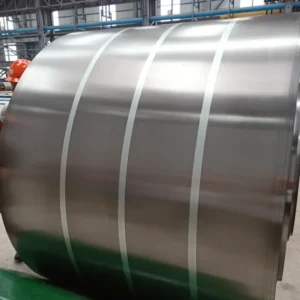
Dimensions and tolerances: Thickness, width, inner diameter/coil weight, and thickness/width tolerance class; whether flatness and camber follow EN 10132 default values or tightened values.
-
Edge and surface: Round edge/sheared edge/trimmed edge, allowable burr limit, surface Ra or polishing requirement, and whether blue temper oxide color is acceptable.
-
Application and forming process: Part name, subsequent stamping/bending/flanging process, and whether heat treatment occurs after stamping. This information directly affects the recommendation direction between annealed and Q+T condition.
-
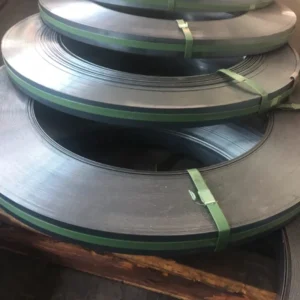
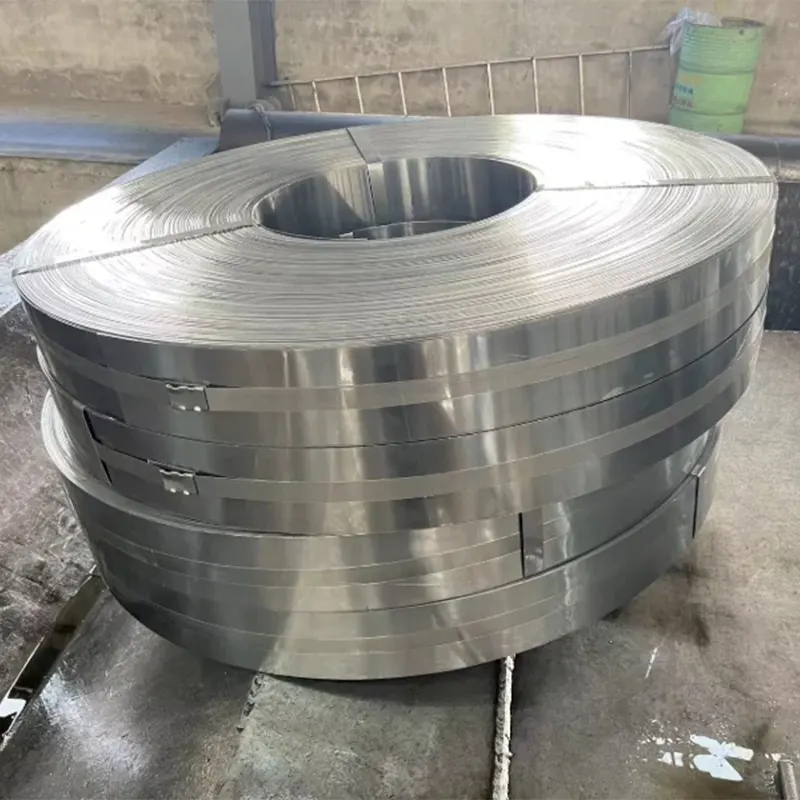
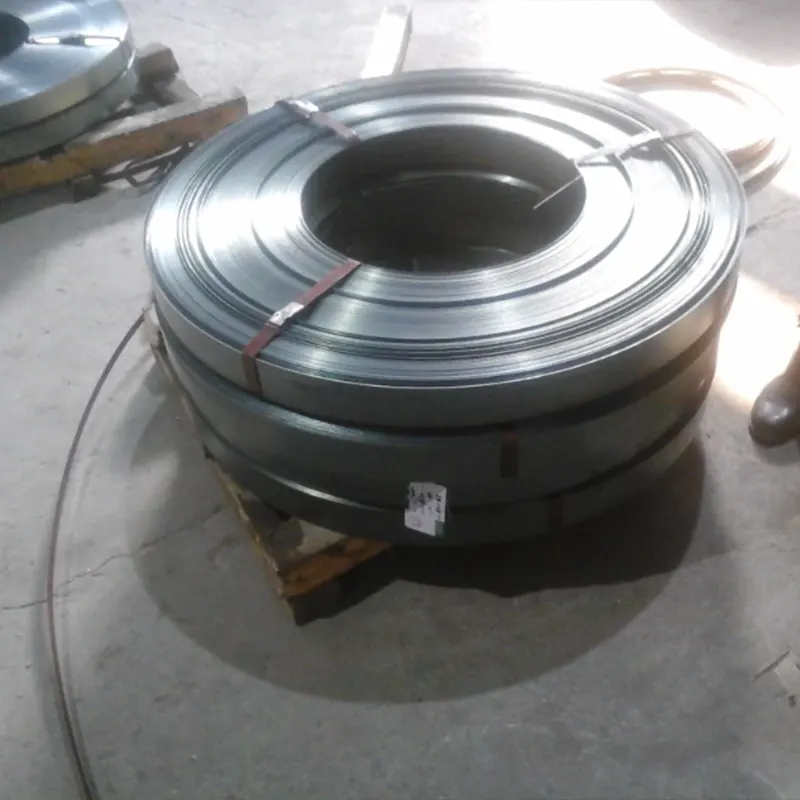
Annual volume / batch size / packaging: Common MOQ reference for high carbon steel strip is approximately from 1 ton, varying with grade, condition, and slitting specification. Packaging (radial/circumferential strapping, wooden pallet/Euro pallet, moisture protection) should be specified in the order.
7. FAQ
Q: Are CK75 and SAE 1075 the same material?
UN: At the grade cross-reference level, CK75 / 1.1248 / C75S / SAE 1075 usually point to materials in the same carbon content range. However, “same grade” does not mean interchangeable: actual carbon range, delivery condition, hardness window, and metallurgical process differences can change forming behavior. For automotive parts, customer drawings and specifications are the final basis.
Q: Should I choose CK67 or CK75 for automotive stamped parts?
UN: If the part geometry is relatively simple and the main function is elasticity/clamping, CK75/C75S is a common candidate. If the part requires more complex stamping forming, CK67 usually leaves more margin between “strength and moderate formability.” The final choice should be confirmed through forming trials and mechanical property verification.
Q: How hard can high carbon steel strip be?
UN: It varies widely by delivery condition: CK75 spheroidize annealed is approximately HV ≤ 189; cold-rolled condition is approximately 21–28 HRC depending on grade; quenched and tempered CK75/C75S can reach HRC 50–55. Inquiries should specify “condition + hardness window,” not just a single hardness value.
Q: Is flatness of 10 mm/1000 mm sufficient?
UN: Under the EN 10132 framework, the typical longitudinal flatness limit for quenched and tempered high carbon steel strip is 10 mm/1000 mm. However, this is a default baseline, not a guarantee for every automotive stamping line. For high-speed automatic feeding or strict part flatness requirements, the value should be tightened and stated in the order.
Q: Can I buy only a small trial batch?
UN: Custom high carbon steel strip involves slitting, heat-treatment condition, and hardness window. Common MOQ reference is approximately from 1 ton, with batch production after sample confirmation. The feasibility of small trial batches depends on the specific grade/condition/specification and should be confirmed directly with the supplier.
Q: How are lead time and price determined?
UN: High carbon steel strip is not a catalog standard product. Price depends on grade, delivery condition, hardness window, dimensional tolerance class, edge/surface requirements, degree of flatness/camber tightening, and quantity. Inquiries should provide the complete parameter set in Section 6; a meaningful comparable quotation cannot be given based only on “CK75 steel strip.”