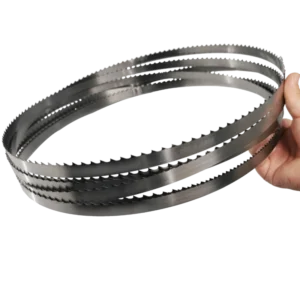
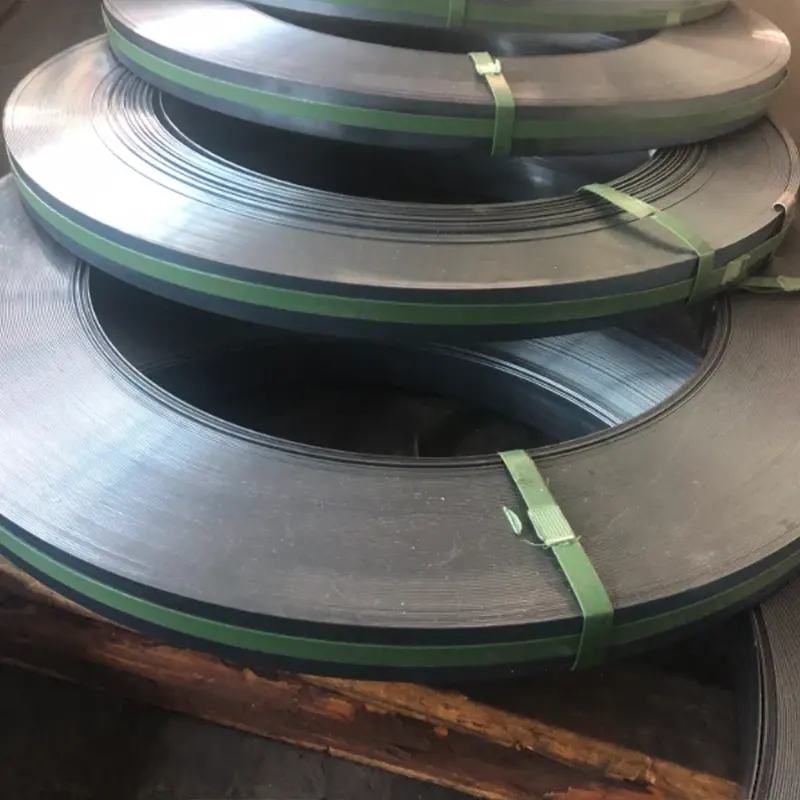
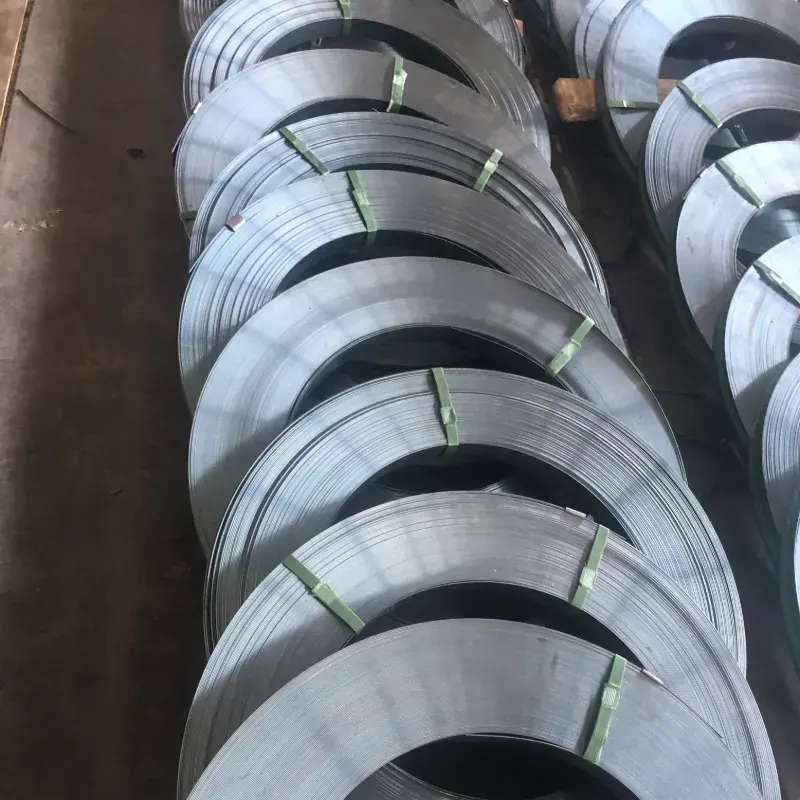
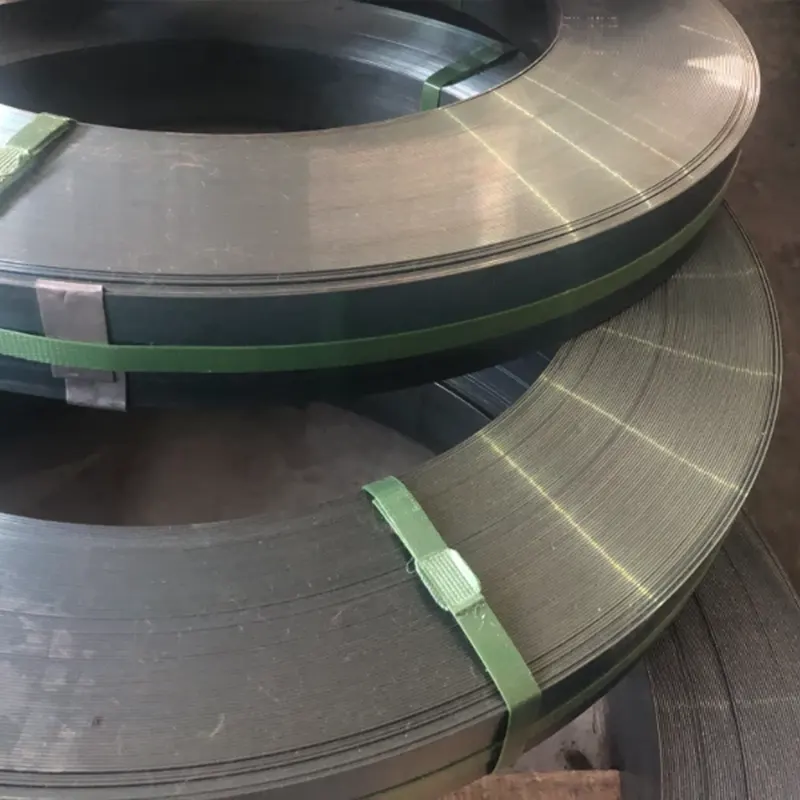
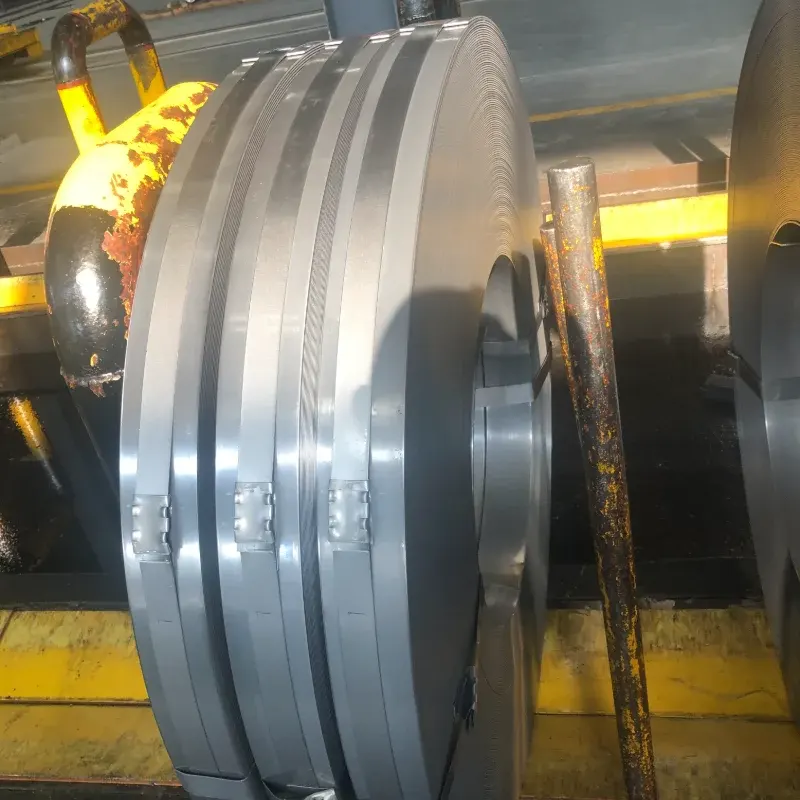
1. Why Precision Stamping Customers Choose Annealed Cold Rolled Steel Strip
Precision stamping failures rarely come from “steel not being hard enough.” They more often come from inconsistent material condition. If thickness drifts by tens of microns from coil head to coil tail, a progressive die can begin to lose feed pitch. If edge burr is too high, guide plates wear faster and cosmetic surfaces pick up marks. If annealing is insufficient or grain structure is uneven, complex bends can crack.
Cold rolling delivers dimensional accuracy and surface quality. Annealing restores ductility, reduces hardness, and relieves internal stresses caused by cold working, so the strip has enough dimensional stability for stamping while retaining the forming window needed for bending and stretching.
For CK45 to CK67 medium- and high-carbon steels, the key value of the annealed condition is: lower hardness to a controlled range and open the forming window. CK67 in the annealed condition can typically be controlled to HV ≤200, well below cold rolled unannealed strip at HV ≤315 and quenched and tempered strip at HV 370–580. This hardness level gives the strip better plastic reserve in the stamping die and preserves the metallurgical basis for subsequent quenching and tempering.
2. Map Your Stamping Pain Points to Strip Parameters
The four most common shop-floor problems are mapped below to technical parameters that can be written into an RFQ and inspection report.
Pain Point 1: Unstable feeding, progressive die pitch loss, or jamming
The root cause is often not the feeder. It is usually thickness consistency and strip shape. Thickness variation changes the gripping radius and friction condition of feed rolls, while camber or edge wave causes lateral movement in the guide channel. Commercial tolerance strip can show thickness variation in the ±0.05 mm range, which is significant in high-speed progressive dies. Precision cold rolled annealed strip produced with AGC rolling and post-annealing temper rolling can tighten thickness tolerance to the ±0.01 mm level and control hardness variation within ±5 HV, removing variables at the feed section.
Ask for in the RFQ: thickness tolerance band, not only nominal thickness; thickness readings across the width; camber limit in mm/m; edge wave / center buckle criteria.
Pain Point 2: High burr affecting die life and part appearance
Burr comes from slitting, but annealing and edge treatment determine whether it becomes a problem. Fully hard strip that has not been annealed work-hardens heavily near the slit edge, and the burr root is brittle. Burr can flake off during feeding and score guide components. Annealed strip has already undergone softening and stress relief before slitting, so the material near the slit edge has better plasticity. With deburred or round edge options, burr height can be controlled to a level suitable for automatic feeding. For progressive dies and high-speed stamping, deburred edges also reduce operator cut risk and reduce ploughing wear on die edges.
Ask for in the RFQ: edge type (mill edge / slit edge / deburred / round edge), burr direction, maximum burr height, edge roughness reference.
Pain Point 3: Dimensional deviation — the part is “almost right” but does not fit at assembly
Dimensional accuracy of cold rolled annealed strip is not only about thickness. Width tolerance, flatness, and camber together determine the positional accuracy of stamped parts. Excessive width tolerance causes lateral positioning error during feeding. Poor flatness creates uneven feed resistance and batch-to-batch drift in part height and bend angle in progressive dies. Camber directly affects how the strip seats in the die. DANS 10132 provides a framework for dimensional and shape tolerances of cold rolled narrow steel strip. Flatness is usually constrained by maximum deviation over a specified length, and camber should be limited per meter or per specified length.
Ask for in the RFQ: width tolerance; flatness criterion, e.g. ≤X mm / 1000 mm; camber limit in mm/m; coil ID/OD and coil weight to match uncoiler capacity.
Pain Point 4: Forming cracks during bending or drawing
This is the core engineering purpose of annealing. Cold rolling increases dislocation density, which raises strength but reduces elongation and forming limit. Annealing restores equiaxed grains and ductility through recrystallization, so the strip can undergo 90° or 180° bending, shallow drawing, and flanging without cracking. For more demanding forming, spheroidized annealing can further spheroidize carbides and provide maximum cold forming capability. The buyer must specify clearly: do you need “soft annealed” or “spheroidized annealed”? The difference matters for severe forming.
Ask for in the RFQ: delivery condition (soft annealed / spheroidized annealed), maximum hardness, minimum elongation, and n-value / r-value data where available for deep drawing or complex bending.
3. Grade Selection: CK45 / CK50 / CK55 / CK60 / CK67
The CK series carbon content increases from approximately 0.42% to approximately 0.70%. In the annealed condition, all grades target good cold formability, but carbon content determines the width of the forming window and the response to subsequent heat treatment.
| Grade | Carbon content (typical, %) | Annealed hardness (typical) | Positioning in precision stamping |
|---|---|---|---|
| CK45 | 0.42–0.50 | ≤19 HRC (approx. HV ≤200) | Formability-first brackets and structural parts requiring subsequent quenching; widest plastic reserve in annealed condition |
| CK50 | 0.47–0.55 | ≤19 HRC | Slightly higher strength potential than CK45; suitable for medium forming severity |
| CK55 | 0.52–0.60 | ≤19 HRC | Balanced choice between strength and formability; often used for wear parts heat-treated after stamping |
| CK60 | 0.57–0.65 | ≤19 HRC | Narrower forming window; suitable for validated forming processes with controlled bend radius |
| CK67 | 0.62–0.70 | ≤19 HRC (HV ≤200) | Highest carbon content; annealed formability remains usable, but bend and draw paths require stricter process validation |
CK67 is appropriate when the part itself needs higher carbon content for hardness or wear resistance after quenching. The buyer should still request actual hardness and elongation for the specific heat lot and validate bend radius and draw depth during trial runs.
4. Verifiable Specification Boundaries and Inspection Evidence
The parameters below should be locked down in the RFQ and acceptance agreement for annealed precision cold rolled steel strip. Actual values are subject to the supplier’s confirmed order technical agreement.
4.1 Dimensions and Shape
| Parameter | Typical requestable range | Why it matters for stamping |
|---|---|---|
| Thickness | 0.10–5.0 mm; precision grade to ±0.01 mm depending on thickness range and grade | Thickness consistency determines feed pitch, bend springback, and assembly clearance |
| Width | 10–600 mm (common range for narrow strip precision stamping) | Width tolerance affects lateral positioning and material utilization |
| Flatness | Per EN 10132 / DANS 10140 framework, e.g. ≤10 mm / 1000 mm longitudinal, or stricter by agreement | Poor shape causes uneven feed resistance and part height drift |
| Camber | Limit by mm/m as agreed | Camber causes lateral deflection in the die |
| Edge | Slit edge / deburred / round edge | Burr height and edge geometry directly affect feed stability and die life |
4.2 Delivery Condition and Mechanical Properties
| Item | Typical annealed requirement | Inspection evidence |
|---|---|---|
| Dureté | CK45–CK67 annealed ≤19 HRC / HV ≤200 for CK67 | Multi-point hardness report along coil length and width |
| Élongation | Minimum by grade and thickness agreement to support target bending/forming process | Tensile test report (ISO 6892-1 or equivalent) |
| Tensile / yield strength | CK67 annealed tensile strength can be in the ≤600 MPa range, depending on grade and process | Heat-lot-linked mechanical property report |
| Surface | Bright annealed or dull/mirror as required; no scratches, pits, or roll marks affecting forming | Surface roughness Ra range; visual and roughness/thickness records for both surfaces |
| Grain size / microstructure | Uniform recrystallized grains; no severe decarburization or uneven spheroidization | Metallographic report as required |
The engineering significance of annealed hardness data is that it defines the lower limit of plastic reserve during stamping and preserves the carbon basis for subsequent quenching and tempering.
4.3 Compliance Note
Chinese export HS codes for precision cold rolled narrow steel strip typically fall under 7211.23 (carbon content <0.25%, width <600 mm) or 7211.90, depending on carbon content, width, and alloying elements. Medium- and high-carbon CK series strip may involve different subheadings and regulatory conditions. Before quotation and order acceptance, the actual HS classification should be confirmed by a qualified customs broker or trade compliance professional based on actual chemical composition, width, and destination country. The applicable Chinese export licensing catalogue and destination-country steel trade measures (such as anti-dumping / safeguard measures) should also be checked. This page does not constitute legal or compliance advice. Before allocating dedicated promotion resources to this product line, complete a trade-compliance assessment.
5. RFQ Checklist: Reduce Back-and-Forth to One Round
Quotation deviations for annealed strip for precision stamping often come from incomplete RFQ information. The checklist below can be used directly as an RFQ template. The closer the supplier’s technical feasibility and price will be to an executable quotation.
Please provide the following information (attach drawings / standards where available):
1. Grade and Standard
-
Specified grade: CK45 / CK50 / CK55 / CK60 / CK67 / Other ______
-
Standard: DANS 10132 / ASTM A29 / JIS / Customer drawing / Other ______
2. Delivery Condition
-
☐ Soft annealed ☐ Spheroidized annealed
-
☐ Cold rolled ☐ Other ______
-
Target hardness range: ______ HRC / HT (if unspecified, quote to typical annealed values for the grade)
3. Dimensions and Tolerances
-
Thickness: ______ mm, tolerance: ______
-
Width: ______ mm, tolerance: ______
-
Coil ID: ______ mm; coil OD / coil weight: ______
-
Flatness requirement: ______ (e.g. ≤___ mm / 1000 mm)
-
Camber limit: ______ mm/m
4. Edge Requirements
-
☐ Slit edge ☐ Deburred ☐ Round edge ☐ Other ______
-
Maximum burr height (if applicable): ______ μm / mm
-
Burr direction requirement: ______
5. Surface
-
☐ Bright ☐ Dull ☐ Mirror ☐ Oiled (oil type: ______)
-
Acceptable / unacceptable surface defects: ______
6. Application Process Information (helps supplier assess forming risk)
-
Process type: ☐ Progressive die stamping ☐ Fine blanking ☐ Single-operation stamping ☐ Bending ☐ Shallow drawing ☐ Flanging ☐ Other ______
-
Typical forming severity: bend radius ______ mm; maximum draw depth ______ mm
-
Subsequent heat treatment: ☐ Quench + temper ☐ Carburizing ☐ None ☐ Other ______
7. Inspection and Documents
-
Required: ☐ Mill certificate with heat lot ☐ Tensile test report ☐ Hardness distribution report ☐ Dimensional inspection report ☐ Metallographic report
-
Third-party inspection: ☐ Not required ☐ Required (agency: ______)
8. Commercial
-
Estimated quantity / monthly usage: ______
-
Destination port / delivery location: ______
-
Trade term: ☐ FOB ☐ CIF ☐ DDP ☐ Other ______
CTA: Send your drawing, tolerance, delivery condition, edge requirement, and forming process to receive a technically reviewed quotation.
6. FAQ
Q: What is the core difference between cold rolled annealed steel strip and cold rolled steel strip in precision stamping?
UN: Cold rolling provides thickness accuracy and surface quality. Annealing after cold rolling restores ductility, lowers hardness, and relieves internal stress through recrystallization, so the strip is less prone to cracking during bending and forming. For CK45–CK67 medium- and high-carbon steels, annealed hardness can be controlled to ≤19 HRC (CK67 approximately HV ≤200), while unannealed cold rolled strip can reach HV ≤315. Precision stamped parts involving bending, flanging, or shallow drawing usually favor the annealed condition. If the part is mainly blanking/piercing with special springback control requirements, the decision should be based on forming severity.
Q: Can CK67 annealed steel strip crack during stamping?
UN: Annealed CK67 typically has hardness around HV ≤200, which provides plastic reserve for cold forming, but carbon content of 0.62%–0.70% means the forming window is narrower than CK45. Cracking depends on the combination of bend radius, draw depth, die clearance, and lubrication. Before bulk purchasing, validate the actual forming process with a trial coil and request measured elongation and hardness for the specific heat lot. For severe forming, evaluate spheroidized annealed condition.
Q: What thickness tolerance can be achieved for cold rolled annealed steel strip for precision stamping?
UN: AGC-controlled precision cold rolling and annealing lines can achieve thickness tolerances in the ±0.01 mm range, depending on thickness range, width, and grade. Standard international tolerance frameworks are wider, but the supplier’s actual guaranteed precision should be written into the order technical agreement and verified by thickness readings along coil length and width.
Q: Why should edge requirements and burr direction be specified in the RFQ?
UN: Burr height and direction on slit edges directly affect progressive die feed stability, guide component wear, and operator safety. Deburring or round edge treatment can reduce burr flaking and die ploughing risk, but adds process cost. Specifying edge type and maximum burr height at the RFQ stage avoids later cost additions or delivery delays caused by default “slit edge” quotation.