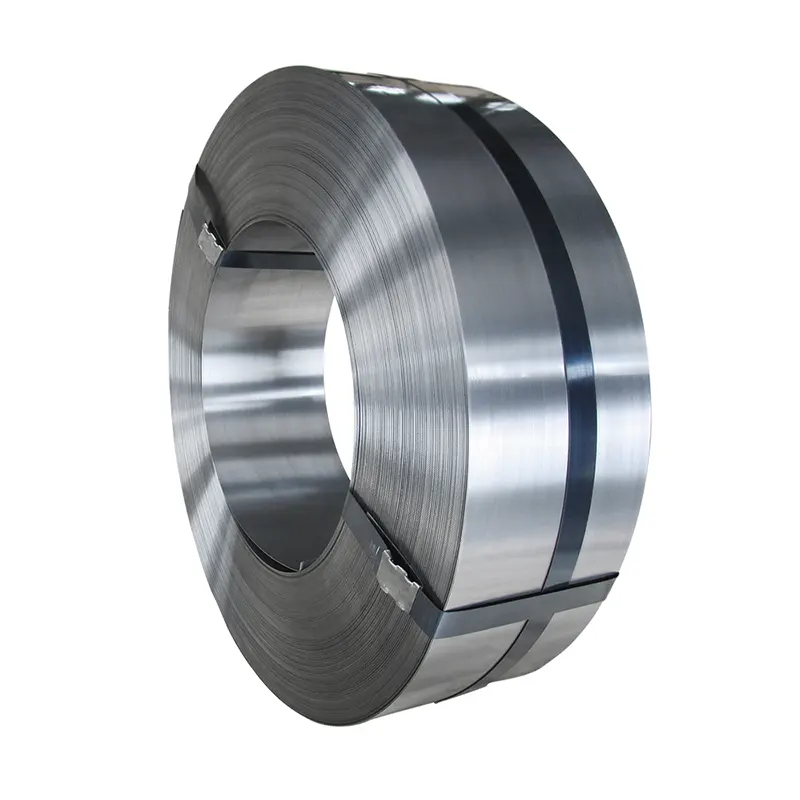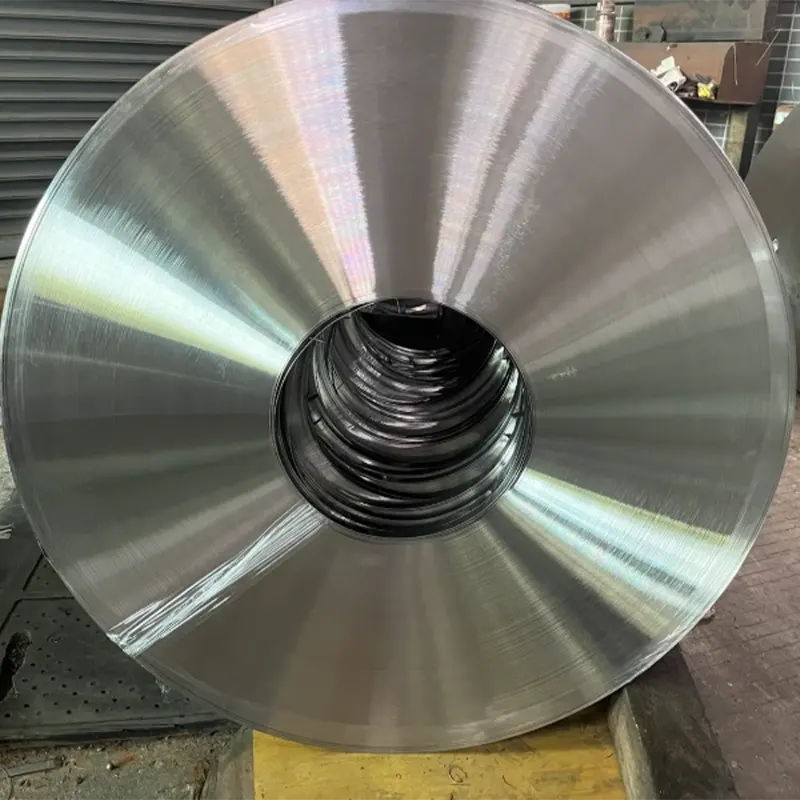
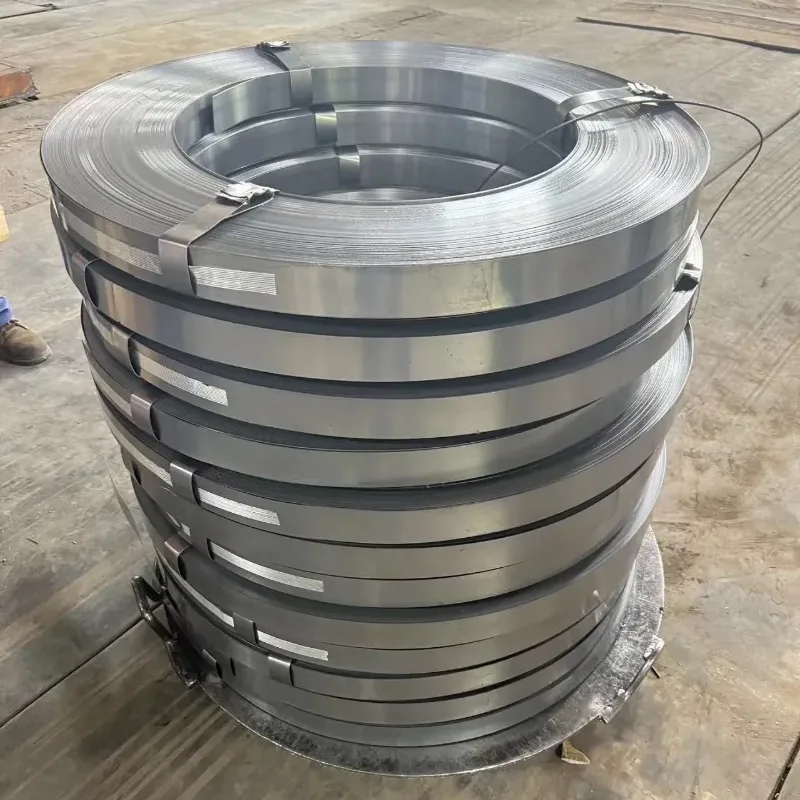
1. Grade Selection Matrix: Where CK45–CK100 Sit in Automotive Components
| Grade | Typical Carbon (%) | Cross-Reference | Typical Role in Automotive Components | Forming Margin Tendency |
|---|---|---|---|---|
| CK45 | 0.42–0.50 | SAE 1045 / 1.1191 | Structural parts, brackets; moderate strength, forming-dominant | Wider |
| CK50 | 0.47–0.55 | SAE 1050 / 1.1206 | Tool backing plates, spring plates; approx. 25–40 HRC after Q+T | 適度 |
| CK55 | 0.52–0.60 | SAE 1055 / C55 | Stamped parts, medium-load clips, washers, fasteners | 適度 |
| CK60 | 0.57–0.65 | SAE 1060 | Stamped parts needing higher strength with some cold-forming margin | Moderate to narrow |
| CK67 | 0.65–0.72 | C67S / SAE 1070 | One of the main European grades for automotive springs and clips; balance point between strength and moderate formability | 適度 |
| CK75 | 0.70–0.80 | C75S / SAE 1075 / 1.1248 | Common starting point for automotive stamped spring parts and metal clips; 1074/1075 are explicitly recommended for stamped spring components | Moderate to narrow |
| CK80 | 0.75–0.85 | C80S / SAE 1080 | Spring elements and wear parts; hardness-priority | Narrow |
| CK95 / CK100 | 0.90–1.00+ | C95S / C100S / SAE 1095 | High hardness / high wear applications; usually specified annealed or spheroidize annealed to preserve formability | Very narrow |
The selection logic can be reduced to one empirical curve: 0.6–0.7% C suits parts that must be stamped into moderately complex shapes; 0.8–1.0% C suits parts that tolerate limited forming and target maximum hardness and wear resistance. CK75 sits in the mid-to-late portion of that curve and is the common compromise between “stamping feasibility” そして “spring/clip load capacity” — but it is not the default answer. Part drawings and forming process capability must be confirmed before the grade. CK67 is also explicitly used in clips and fasteners, and its slightly lower carbon content makes it worth evaluating first when a somewhat wider forming window is needed.
2. Seven Specifications That Must Be Defined Together
2.1 Thickness and Width
Industrial supply of narrow cold rolled high carbon strip runs approximately0.08–5.0 mm thickness and 2–1250 mm width, customizable to line and slitting capability. Automotive stamped parts and clips typically concentrate in0.2–3.0 mm. Thin gauges impose significantly tighter requirements on thickness tolerance, straightness, and edge quality, and must be raised explicitly at inquiry.
The effect of thickness on spring function is non-linear: for a simple rectangular cantilever, bending stiffness scales with the cube of thickness. Strip that sits high versus low within the tolerance band — both “conforming” — can produce noticeably different load output. Tolerances should be derived from thefunctional window, not from a default precision grade applied first.
2.2 Hardness: Always Specified Together With Delivery Condition
Hardness is not a standalone number; it spans a wide range across delivery conditions:
- 焼き鈍し / spheroidize annealed: CK75 spheroidize annealed reference hardness HV ≤ 189, tensile strength approx. ≤610 MPa; CK67 annealed up to HV ≤ 200. The goal is maximum formability, suited to a “stamp first, harden later” route.
- Cold rolled: typical hardness window approx. 21–28 HRC depending on grade and reduction; CK67 cold rolled reference HV ≤ 315.
- Quenched and tempered (Q+T): CK75/C75S reaches HRC 50–55; after Q+T, tensile strength ≥1200 MPa and yield strength ≥1000 MPa; CK67 Q+T reference HV 370–580. Grade 75 (CK75 basis) in the untreated condition is HBS ≤ 285, annealed HBS ≤ 241.
- Hard rolled and tempered (1/2H–FH): hardness rises with temper level and formability falls correspondingly — suited to parts that receive no post-stamping heat treatment but still need spring performance.
Batch-to-batch hardness drift is one of the common causes of downstream spring failure. Hardness must be stated in the order as an HRC or HV range and confirmed item by item on each Mill Test Certificate.
2.3 Delivery Condition: Fix the Process Route First, Then Talk About Hardness
The correct engineering sequence is: first determine whether the part is heat treated before forming or formed directly from pre-hardened incoming material; then lock the delivery condition and hardness window. Each route carries non-negligible costs:
- Soft incoming + post-forming quench and temper: permits more complex shapes, but introduces distortion, scale, decarburization, and piece-to-piece heat treatment consistency issues.
- Q+T incoming + direct forming: the producer controls hardness and straightness at coil level and final quenching can be eliminated, but forming severity is limited and demands tighter edge quality and tooling control.
The correspondence between common delivery conditions and forming capability:
| Delivery Condition | Forming Capability | Hardness Reference | Typical Use |
|---|---|---|---|
| Spheroidize annealed | Suited to deep forming / complex shapes, hardened afterwards | CK75 HV ≤ 189 | Complex stamped spring parts |
| Soft annealed | Moderate forming and machinability | Grade dependent | Parts needing consistent heat treatment |
| Cold rolled | Moderate deformation | 21–28 HRC | Stamped parts needing some strength plus formability |
| Quenched and tempered (Q+T) | Limited; elasticity/strength dominant | CK75/C75S 50–55 HRC | Hardness as-received, formed then assembled directly |
| Hard rolled and tempered (1/2H–FH) | Falls as temper level rises | Graded by temper | Spring performance without post-stamping heat treatment |
2.4 Straightness and Camber
The effect of straightness and camber on automatic stamping or high-speed feeding lines is often more direct than thickness tolerance itself. Excessive camber (lateral bow along the strip) causes the strip to track off-line in a progressive die, displacing holes and edges and creating uneven tension; coil set in the coiling direction and crossbow across the width arise from incoming shape, rolling, slitting, residual stress, and rewind tension.
Using typical requirements for quenched and tempered high carbon strip under the EN 10132 framework as a reference: longitudinal straightness of cut lengths in the rolling direction should not exceed 10 mm/1000 mm; tighter requirements must be agreed separately in the order. Camber is graded per the relevant tables of EN 10140 / EN 10132, and tight tolerances for precision applications must be written explicitly into the commercial agreement. An operable baseline iscamber max 1 mm/3 m, but this should be treated as a starting point rather than a universal standard; for high-speed automatic feeding, camber should be defined per feed length rather than described loosely as “straight.”
2.5 Edge Quality: An Independent Acceptance Item Hidden Behind the Words “Cold Rolled Strip”
The slit edge is the most underestimated fatigue origin in automotive clips and precision formed parts. Rotary slitting produces characteristicrollover, burnish, fracture, and burr zones; tool clearance, sharpness, overlap, alignment, material hardness, and tension together determine the relative proportion of these zones. Excessive clearance enlarges the fracture zone and burr; insufficient clearance raises friction and secondary shear.
Burr is not only a handling hazard: if burr sits on the tension side of a bend, it raises local strain and becomes a crack initiator. Spring stampers commonly controlburr direction so that the smoother edge faces the more critical bend or contact surface. For automotive clips and precision formed parts, edge quality should be an independent acceptance item, not implicitly covered by the generic description “cold rolled strip”; edge type (slit, バリ取りした, 丸い, shaved, etc.) and inspection method must be specified.
2.6 Surface Quality and Decarburization Depth
Scratches, pits, roll marks, and seams act as stress concentrators under cyclic loading. For springs in repeated loading, surface quality carries far more weight than for statically loaded structural parts.Decarburization is a carbon-depleted surface layer formed during hot working or heat treatment that reduces surface hardness and post-quench fatigue strength; conversely, uncontrolled carbon-rich layers can introduce brittleness. Critical springs should specify permissible total/partial decarburization depth and measurement method in the strip standard or part drawing.
3. Application Scenarios and the Confirmation Path
Stamped parts: annealed CK55, CK60, and CK67 are a common starting range. Where geometry is moderately complex and some strength is still required after stamping, CK67/C75S in annealed or lightly rolled condition is worth evaluating first.
Metal clips: C55 and C67S/C75S have documented use in clips and fasteners. The dominant failure mode for clips is usually elastic decay or permanent set, sohardness consistency in the delivery condition, straightness, and edge integrity matter more than “whether the carbon content is high enough.”
Precision formed components: the higher the carbon content, the harder cold forming becomes and the more pronounced the edge-cracking tendency. Above roughly 0.9% C, forming requirements are severe; complex shapes should be considered in annealed or lightly rolled condition rather than stamped directly in the hard condition. CK80–CK100 better suit scenarios with limited forming severity and a priority on high hardness and wear resistance.
Customer design-validated parts: for parts already validated by OEM design verification, changing grade or delivery condition constitutes a material change. Mechanical properties, forming process window, and customer specification must be re-confirmed; substitution based merely on “similar high carbon steel” is not acceptable.
4. Standards and Acceptance Framework
| Standard | Scope | Correspondence to Specifications in This Article |
|---|---|---|
| EN 10132 (-4) | Technical delivery conditions for cold rolled narrow steel strip in heat-treated condition; -4 covers quenched and tempered cold rolled strip | Grades, dimensional/shape tolerances, surface condition, inspection requirements |
| EN 10140 | Reference system for dimensional and shape tolerances of cold rolled narrow strip | Basis for camber and straightness grading |
| ASTM A684/A684M | Cold rolled high carbon steel strip, covering spheroidize annealed, soft annealed, intermediate hardness, and full hard | Delivery condition classification and hardness/bend test framework |
| JFS A 2001 | Cold rolled steel sheet and strip for automotive use | Includes straightness, camber, and squareness provisions |
Grade cross-reference: CK75 / 1.1248 / C75S / SAE 1075 are common equivalents for the same material across different standards systems, butequivalence does not mean free interchangeability, particularly for automotive safety-related parts. Each delivery should be accompanied by aMill Test Certificate, with hardness, tensile strength, chemical composition, and dimensional/straightness results corresponding item by item to the order specification.
5. よくある質問
Q1: Are CK75 and SAE 1075 the same material? Can they be interchanged?
CK75, C75S, 1.1248, and SAE 1075 are common equivalents for material in the same carbon range (approximately 0.70–0.80% C) across different standards systems and are closely similar in chemical composition. But “equivalent” does not mean “interchangeable.” Actual forming behavior and final part performance depend ondelivery condition, hardness window, edge quality, and dimensional tolerance — and these can vary widely under the single label “CK75.” For automotive parts that have completed design validation, switching to a material from a different standards system or in a different delivery condition requires re-confirmation of mechanical properties, forming process, and customer specification.
第2四半期: For an automotive clip, should I choose CK67 or CK75?
Both are widely used in automotive clips and spring parts. CK67 (approx. 0.65–0.72% C) leans toward the formability side of the strength/formability balance; CK75 (approx. 0.70–0.80% C) leans toward load capacity. If clip geometry is relatively complex and needs greater cold-bend or stamping margin, annealed or lightly rolled CK67 is worth evaluating first; if elastic load is the core function and forming severity is controllable, quenched and tempered CK75 (e.g., HRC 50–55) is a common choice. The final decision must rest on theclip’s load-deflection requirement, bend radius, burr direction, and the supplier’s actual process capability — not on grade carbon content alone.
Q3: Hardness is within spec — why does it still crack during stamping?
Hardness is a coil-level average or range and cannot determine forming outcome on its own. Common causes of cracking include: edge burr or micro-cracks located on the tension side of a bend, excessive camber causing feed misalignment and local strain concentration, thickness sitting high within the tolerance band pushing actual strain beyond the process window, and a decarburized layer altering surface ductility. For Q+T incoming material the forming margin is inherently smaller than for annealed material, and minimum bend radius also depends on hardness, thickness, edge condition, and rolling direction. The usual resolution path is to checkedge quality and camber first, then re-verify hardness and thickness distribution — rather than simply lowering hardness.
Q4: How should straightness and camber be written into an order?
Do not write only “straight” または “straight on delivery.” Specify it in ameasurable way: straightness along the rolling direction expressed in mm/1000 mm (under the EN 10132 framework, a typical upper limit for quenched and tempered strip is 10 mm/1000 mm, with tighter requirements agreed separately); camber defined against aspecified feed length or gauge length, with coil set and crossbow limits added as needed, to ensure the strip can enter the customer’s decoiler and leveller.
Q5: What information is needed at inquiry to get comparable quotations?
High carbon steel strip is an industrial intermediate custom-made to drawing and specification, not a catalog standard product. An effective inquiry provides in one go: grade + delivery condition + hardness window (e.g., “CK75, quenched and tempered, HRC 46–48” または “CK67, spheroidize annealed, HV ≤ 200”); thickness, width, and tolerances; edge type and burr direction/limits; straightness/camber limits; surface condition (磨かれた, blued, oiled, etc.); coil ID/OD and coil weight; annual volume. When this information is missing, suppliers can only quote on assumptions, and prices between suppliers are not comparable.