1. Start with Cross-Section, Then Pitch
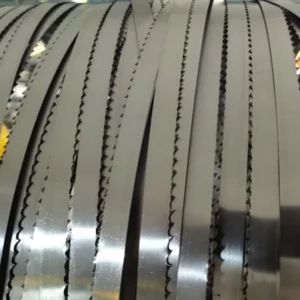
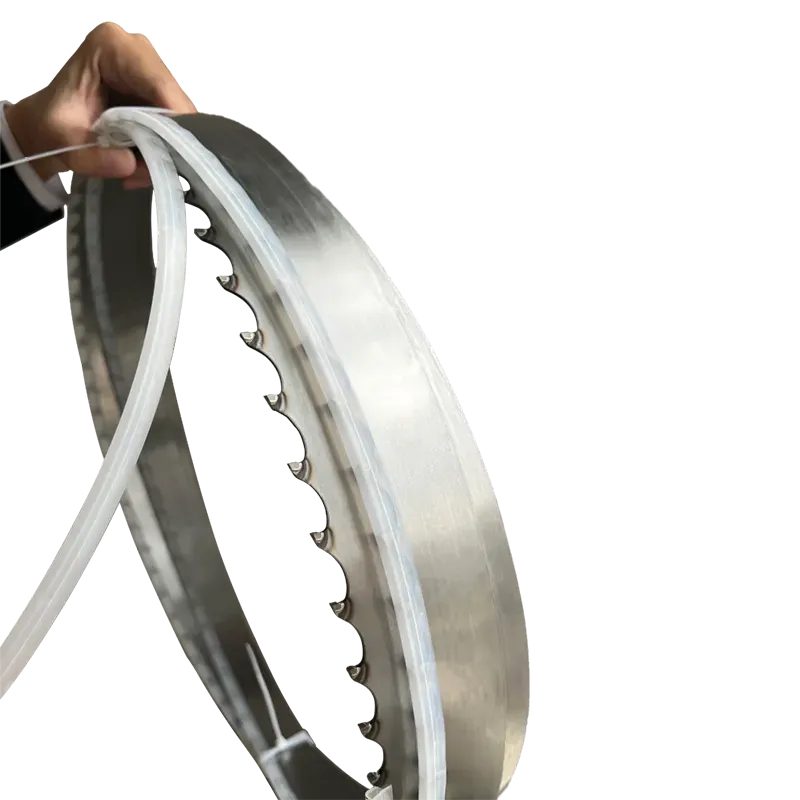
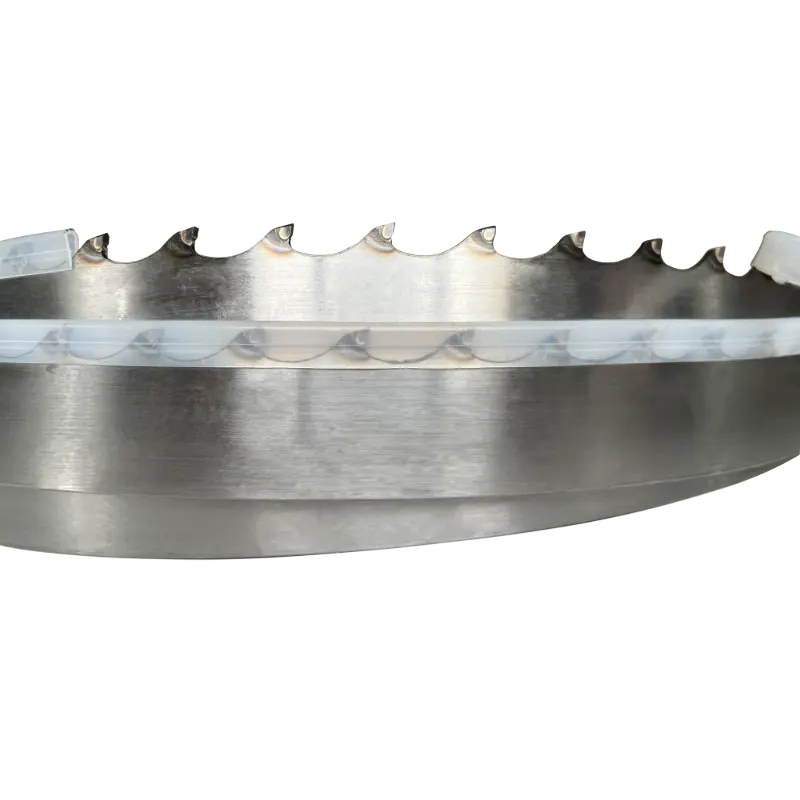
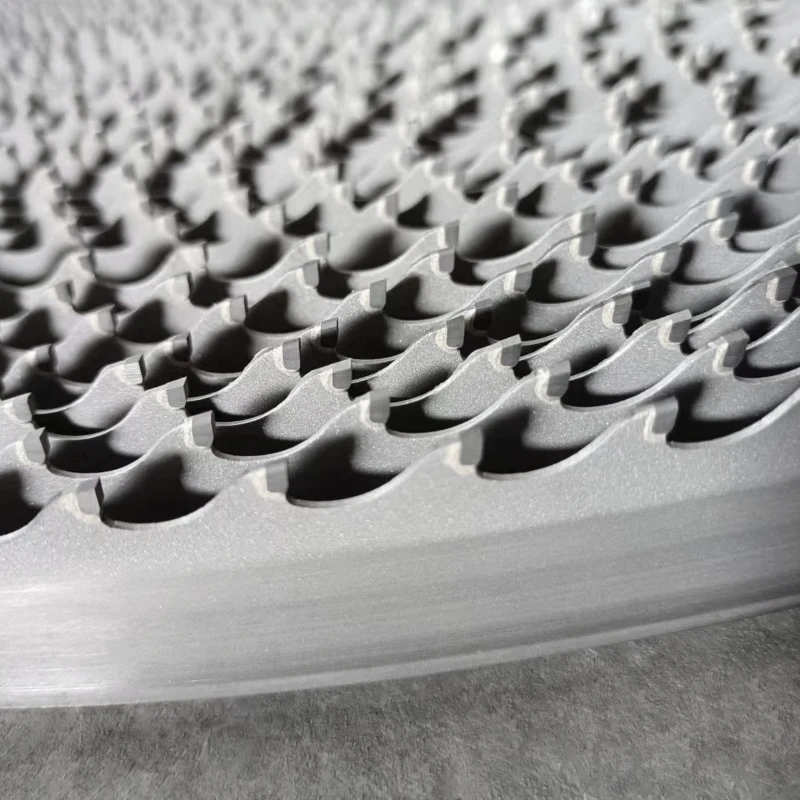
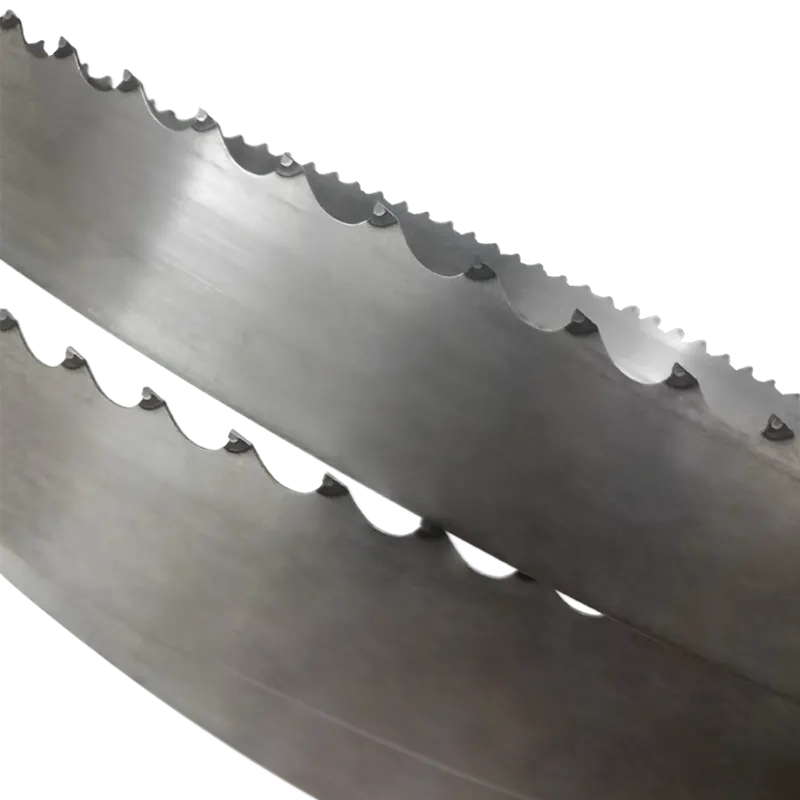
Variable pitch exists to maintain a sensible number of teeth in cut across different section sizes. The industry rule of thumb is to keep approximately 3–6 teeth engaged in the cut at the same time. Too fine: the chip gullets fill, the blade overheats, cuts crooked, and strips teeth in large solids. Too coarse: too few teeth engage on thin walls, and tooth tips catch and fracture.
Solid Bar / Thick Solid Sections
Select by diameter or section width. The larger the diameter, the coarser the pitch, so a large gullet can carry chips out of the cut.
| Solid Section Size | Recommended Variable Pitch (TPI) | Typical Application |
|---|---|---|
| ≤ 25 mm | 10/14 | Small round bar, fine square stock |
| 25–50 mm | 6/10 or 5/8 | Medium solid bar, general machining cut-off |
| 50–80 mm | 5/8 or 4/6 | Larger solid bar, balance of efficiency and chip clearance |
| 80–120 mm | 4/6 or 3/4 | Large bar, coarse pitch preferred |
| 120–200 mm | 3/4 or 2/3 | Large solid section, heavy-duty sawing |
| 200–400 mm | 2/3 | Very large solid round bar, billet |
For contour or curve cutting on vertical saws, also consider blade width versus minimum cutting radius; pitch selection should be governed by the smallest section where tooth stripping would occur.
Tube / Thin-Wall Hollow Sections
Select by wall thickness, not outside diameter. The first failure mode in thin-wall tube is tooth tips catching the wall, tearing or stripping teeth. Fine pitch is required to keep the number of teeth in cut high enough.
| Wall Thickness | Recommended Pitch (TPI) | Notes |
|---|---|---|
| < 2 mm | 14/18 or 10/14 | Very thin wall; fine pitch prevents tooth catching |
| 2–3 mm | 10/14 | Workhorse pitch for thin-wall tube |
| 3–5 mm | 8/12 or 6/10 | Medium wall |
| 5–8 mm | 6/10 or 5/8 | Thick-wall tube, transitioning toward solid logic |
| 8–12 mm | 5/8 or 4/6 | Near thick-wall; chip clearance demand rises |
| > 12 mm | 4/6 or 3/4 | Approaching solid-section selection |
Starrett’s tube/profile selection logic is also explicit: check wall thickness first, then outside diameter or maximum section length, and cross the two axes to arrive at pitch; for thin-wall parts, wall thickness is decisive.
When bundle-cutting tube, do not select pitch by single-wall thickness. Judge by the total section thickness in the cut—after bundling, the actual cut length is often several times the single wall.
Profiles / Structural Sections
Angle, channel, H-beam, and square-tube structural work is characterized by a cutting length that changes continuously through the cut: thick solid at the flange, thin wall at the web. Constant pitch struggles to serve both ends of that range; variable pitch is at its most advantageous here—mixed pitch covers the thicker zones, retains enough teeth in thin walls, and reduces vibration and noise.
| Profile Condition | Recommended Pitch (TPI) | Logic |
|---|---|---|
| Thin-wall profile, wall ≤ 6 mm | 10/14 → 6/10 | Lower limit set by no tooth stripping at the thinnest point |
| Medium profile, 6–12 mm equivalent thickness | 6/10 or 5/8 | General structural workhorse |
| Thick-wall / heavy profile, > 12 mm | 5/8 or 4/6 | Transitioning toward solid pitch |
| Bundle profiles, mixed small sizes | 8/12 or 6/10 | Balances multiple contact points and chip clearance |
A practical rule: if profile cutting repeatedly produces crooked cuts, chatter marks, or early tooth-tip spalling, and machine tension is correct, adjust one step finer first. If the symptom is poor chip evacuation, bogging down, or low efficiency on large sections, adjust one step coarser.
2. Material Grades: M2 / M42 / M51
A bi-metal band saw blade has a high-speed steel tooth tip welded to a backing strip. The M number refers to the HSS alloy grade of the tooth tip, not the backing steel. The backing provides flexibility and fatigue resistance; the tooth material provides wear resistance and hot hardness—clear division of labor.
M42: The Factual Baseline for Application Selection
M42 tooth material contains approximately 8% cobalt, with tooth-tip hardness of 68–69 HRC, covering carbon steel, alloy steel, tool steel, and stainless steel up to about 45 HRC. It is the most rational default starting point for the vast majority of shop-floor conditions: the balance of wear resistance, toughness, and cost already covers more than 80% of routine metal cut-off.
Among variable-pitch M42 products, 4/6 and 5/8 TPI are the two widest-coverage pitches: 4/6 leans toward medium solid and thick wall, 5/8 toward general solid and structural work.
M51: The Upgrade Path for Difficult Materials
M51 raises cobalt to approximately 10%, adds tungsten, reaches 69–70 HRC tooth-tip hardness, and lifts the applicable hardness ceiling to around 50 HRC; in some product specifications, tensile strength can cover workpiece materials up to approximately 1600 N/mm².
Signals that justify M51 rather than M42 include:
-
Workpiece hardness consistently above 42–45 HRC, with obvious M42 life loss;
-
Batch cutting of stainless or tool steel where blade changes are the bottleneck;
-
Intermittent machining of high-temperature alloys and difficult-to-cut alloys;
-
Machine rigidity and tension sufficient to exploit a harder tooth material.
The trade-off is that M51 tooth tips are less tough than M42 and more sensitive to machine vibration, aggressive feed, and thin-wall tooth catching. In thin-wall tube and vibration-sensitive work, do not default to M51 for the sake of “better.”
M2: The Economic Entry Point
M2 has lower cobalt content and hot hardness than M42, suiting low-carbon steel, general structural steel, and low-alloy steel routine cut-off, as well as manual or semi-automatic sawing and non-continuous production. In plain carbon steel up to about 30–35 HRC, M2 can deliver acceptable economics; once stainless, tool steel, or higher hardness enters the picture, M42 is the rational starting point.
3. Application Selection Quick-Reference Matrix
Putting cross-section and material in one table is what turns selection from “experience” into a repeatable process.
| Section Type | Size / Wall Thickness | First-Choice Pitch | General Material | Difficult-Material Upgrade |
|---|---|---|---|---|
| Solid bar | ≤ 25 mm | 10/14 | M42 | M51 (high hardness) |
| Solid bar | 25–50 mm | 6/10 or 5/8 | M42 | M51 |
| Solid bar | 50–80 mm | 5/8 or 4/6 | M42 | M51 |
| Solid bar | 80–200 mm | 4/6 → 2/3 | M42 | M51 (large-section heavy duty) |
| Tube | Wall < 2 mm | 14/18 or 10/14 | M42 preferred | Blind M51 upgrade not recommended |
| Tube | Wall 2–5 mm | 10/14 → 8/12 | M42 | M51 depending on batch and hardness |
| Tube | Wall 5–12 mm | 6/10 → 5/8 | M42 | M51 |
| Profile | Thin-wall / ≤ 6 mm equivalent | 10/14 → 6/10 | M42 | M42 is the safer choice |
| Profile | Medium 6–12 mm | 6/10 or 5/8 | M42 | M51 |
| Profile | Heavy / > 12 mm | 5/8 or 4/6 | M42 | M51 |
M42 sets the baseline, cross-section sets the pitch, upgrade to M51 when hardness exceeds 45 HRC or for batch stainless; do not use M51 to “compensate” for a wrong pitch in thin-wall or vibration-sensitive work.
4. Three Operational Checks
Check 1: Are Teeth in Cut Within the 3–6 Range?
Once you have a recommended variable-pitch range, back-calculate teeth using the thinnest or smallest dimension in the cut. For example, a 3 mm wall tube with 10/14 TPI has 10–14 teeth per inch, so roughly 1.2–1.7 teeth across 3 mm; as the cutting arc extends around both walls and the core, the actual number of contacting teeth rises. If the calculation shows fewer than 3 teeth at the thin wall, adjust further toward fine pitch.
Check 2: New Blades Must Be Broken In
New tooth tips are extremely sharp, and micro-chipping is a major source of early failure. Correct practice: run at normal speed and about half the normal feed rate for the first 15 minutes or so, allowing the tips to slightly dull into a stable cutting edge, then return to full feed. This matters especially for M51, because the higher-hardness tooth material is more brittle; going straight to full load significantly increases the risk of tooth stripping.
Check 3: Switching Between M42 and M51 Is Not “The More Expensive, The Better”
M51 has a legitimate use case driven by hardness and batch size together. If the workpiece is thin-wall tube, mixed profile cutting, or the machine’s tension and guide-block condition are average, M42’s toughness is the more reliable engineering choice. Putting M51 into thin-wall tooth-catching work it is not suited to yields earlier tooth-tip failure, not longer life.
5. FAQ
Q: What pitch should I use for 50 mm solid bar in M42?
A: Start with 5/8 or 4/6 TPI. At 50 mm the two overlap: choose 5/8 for surface finish and crooked-cut control, 4/6 for chip-evacuation efficiency.
Q: M42 won’t cut 2 mm wall stainless tube—will M51 help?
A: If the failure mode is tooth catching, tooth stripping, or wall tearing, M51 will not solve the root cause and may worsen it because the tooth tips are more brittle. First confirm the pitch is in the 10/14 or 14/18 range, then check tension and feed. M51’s upgrade value lies in workpieces above 45 HRC with sufficiently thick sections.
Q: Can M2 cut stainless?
A: It can be tried briefly, but it is not a production-grade choice. M2’s hot hardness and wear resistance are insufficient to maintain reasonable life in the work-hardened layer of austenitic stainless; M42 is the practical minimum rational grade for stainless cut-off.
Q: What is the difference between variable-pitch 4/6 and constant-pitch 4 TPI?
A: Constant pitch offers consistency in high-volume cutting of stable solid sections; variable-pitch 4/6 produces lower vibration and a wider applicable size range in changing sections, profiles, and bundle cutting, allowing one pitch to cover multiple sizes and reduce blade changes.
Q: How does the Toolex 12″ (300 mm) 32 TPI Fine White Bi-Metal hacksaw blade relate to band saw blade selection?
A: It is a hand hacksaw blade and does not participate in the band saw pitch matrix. A 32 TPI fine-tooth hacksaw blade is for bench fitting, small-section precision work, and on-site installation—a complementary finishing and local cut-off tool after band saw cut-off. Band saw selection solves “cut-off efficiency”; the hacksaw blade solves “on-site minor adjustment and cutting where the machine cannot reach.” The two are complementary in the process, not on the same selection axis.