1. What Is High Carbon Steel Strip?
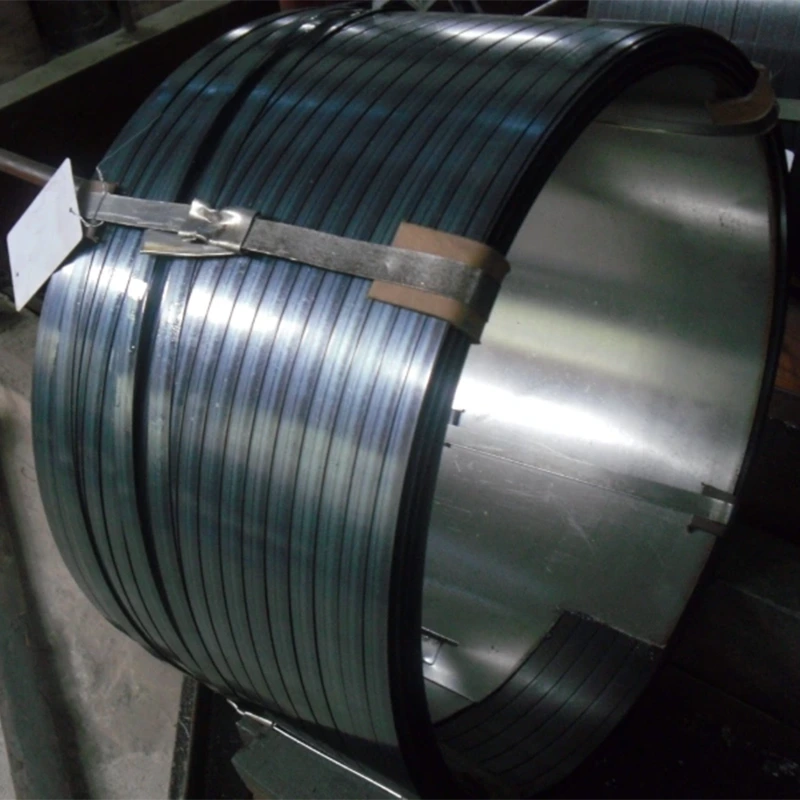
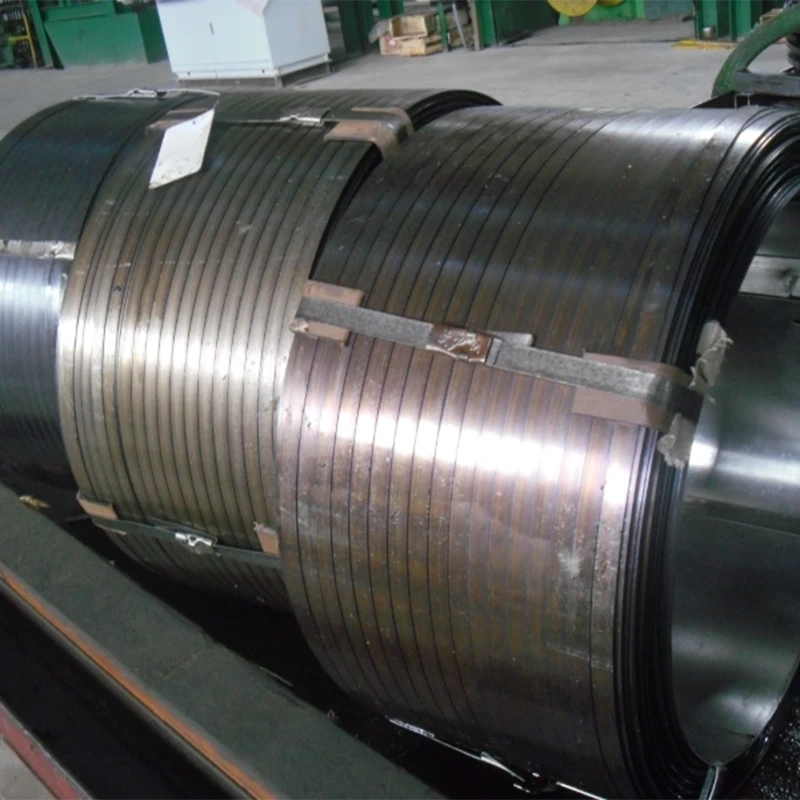
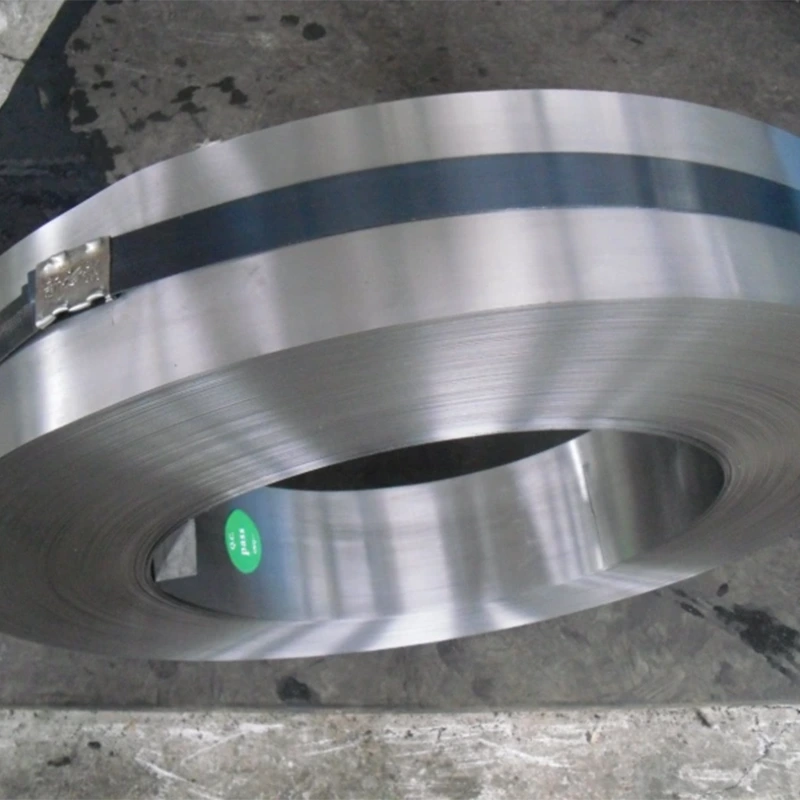
High carbon steel strip is narrow-width strip cold-rolled from carbon steel, with a carbon content ceiling generally above 0.25% and common industrial ranges concentrated at 0.30%–1.05%, thickness typically 0.08–5.0 mm, and width on the order of 2–1,250 mm (specific capability depends on the rolling mill and slitting equipment). Unlike plate, the defining characteristics of strip are narrow width, thin gauge, and delivery in coil or cut-to-length form, with downstream processing via stamping, roll forming, slitting, or direct installation.
The core performance logic of high carbon steel strip can be summarized as a triangular constraint:
Carbon content ↑ → hardness / strength / elastic limit ↑, but ductility and cold formability ↓.
Therefore, the engineering value of high carbon steel strip is not “the harder the better,” but rather using delivery condition (annealed, cold-rolled, quenched and tempered) to tune the performance potential locked in by carbon content into a window that matches the downstream forming process.
2. Common Grades: CK45, CK55, CK75, CK95 and CK100
The CK series is the most common grade naming system for high carbon steel strip under the European framework, with the number roughly corresponding to the carbon content midpoint ×100. The comparison below is based on typical industrial cold-rolled high carbon strip capability; specific ranges may vary slightly by producer.
| Grade | Carbon content (%) | AISI/SAE approx. | Annealed hardness | Q+T hardness | Typical role |
|---|---|---|---|---|---|
| CK45 | 0.42–0.50 | 1045 | ≤19 HRC | 20–30 HRC | Forming-first: shafts, racks, general machinery parts |
| CK55 | 0.52–0.60 | 1055 | ≤19 HRC | 28–45 HRC | Stamped parts, saw blade bodies, parts needing strength with moderate forming |
| CK75 | 0.72–0.80 | 1075 | ≤19 HRC | 35–55 HRC | Elasticity/wear transition point: hand tools, rolling shutter springs, saw blades |
| CK95 | 0.90–1.00 | ~1095 | — | 40–58 HRC | Direct high-hardness service: precision edges, high-hardness tooling |
| CK100 | 0.95–1.05 | ~1095 | — | 42–60 HRC | Ultimate hardness: precision blades, razor-grade edges |
CK45 and CK55 both sit at ≤19 HRC in the annealed condition; the difference lies in the strength ceiling after quenching and tempering. From CK75 onward, Q+T hardness enters the 35 HRC+ range and the cold-forming window narrows significantly. CK95/CK100 in industrial practice are almost never used via a “cold form then use” route; they enter service directly in the quenched and tempered condition.
Relationship to S65C-CSP: JIS G4802 S65C-CSP has a carbon content of 0.60%–0.70%, falling between CK55 and CK75, but its standard positioning is cold-rolled spring steel strip, where elastic limit, fatigue performance, and hardness uniformity take priority over general formability. Typical mechanical properties in the Q+T condition are yield strength ≥356 MPa and tensile strength ≥795 MPa. It can be understood as: a strip grade with purpose-built constraints for the specific function of “elastic element” at a similar carbon level.
3. How Carbon Content Affects Hardness and Formability
3.1 Hardness: carbon is the first variable in solid-solution strengthening and heat treatment response
The hardness of cold-rolled high carbon steel strip comes from two superimposed mechanisms: work hardening (rolling reduction) and heat treatment hardening (quenching + tempering). The higher the carbon content, the higher the achievable hardness after martensitic transformation. Industrial data gives typical hardness windows of ≤19 HRC annealed, 21–28 HRC cold-rolled, and 29–59 HRC quenched and tempered. CK95/CK100 can reach a Q+T ceiling of 58–60 HRC, while CK45 typically only reaches around 30 HRC after Q+T.
3.2 Formability: around 0.50% C is a key engineering dividing line
Cold formability is far more sensitive to carbon content than hardness. A pattern repeatedly confirmed in standard documents is: once carbon content exceeds roughly 0.50%, annealed strength remains elevated and cold formability drops rapidly. This explains why:
- CK45/CK55 are designed in the annealed condition to be “stampable and bendable”;
- CK75 and above in most applications no longer pursue significant cold forming, but rather enter service directly in the Q+T condition, or permit only light forming (such as small-radius rolling or flanging);
- Spring steel strip such as S65C-CSP, despite not having the highest carbon content, imposes stricter requirements on surface quality, decarburization layer, and hardness uniformity, because spring failure is often not “not hard enough” but local soft spots or surface defects initiating fatigue cracks.
4. Applications in Stamped Parts, Clips and Industrial Components
Downstream applications of high carbon steel strip can be understood along two axes—amount of forming and service stress—rather than a simple list of industry names.
4.1 Stamped Parts
Stamping requires the material to avoid cracking and control springback under complex strain paths. CK45 and CK55 in the annealed condition are the mainstay for this scenario: moderate carbon content, low hardness, and sufficient plastic reserve for blanking, bending, and shallow drawing of moderate complexity. For retaining clips, shims, and connecting clips—parts that “need their own elasticity after stamping”—S65C-CSP or CK75 in the Q+T/spring condition is more commonly selected: first formed in the annealed condition, then heat-treated to develop elasticity.
4.2 Clips & Spring Elements
Retaining clips, spring clips, retractor springs, and clutch plates are the most classic “functional part” applications of high carbon steel strip. The performance requirement here is not hardness alone but elastic limit + fatigue resistance + dimensional stability. S65C-CSP’s spring steel strip positioning covers exactly this range; CK75 in the Q+T condition provides a higher hardness-cost balance for hand tool gripping parts and rolling shutter springs.
4.3 Industrial Components & Cutting Edges
Saw blades, scrapers, putty knives, and precision edges rely on high hardness for wear resistance and edge retention. CK75 in the Q+T condition is a common choice for woodworking band saws and hand tools; CK95/CK100 at 40–60 HRC Q+T serves precision blades and razor-grade edges. In these applications, “quenched and tempered” in the delivery condition is not optional but part of the functional definition: what the customer buys is not “CK100 strip” but “CK100 strip already at the target hardness window, requiring no further heat treatment.”
5. How to Select Thickness, Width and Delivery Condition
5.1 Delivery Condition: The First Decision Before Dimensions
| Delivery condition | Typical hardness | Suitable forming / use | Selection signal |
|---|---|---|---|
| Annealed | ≤19 HRC | Subsequent stamping, bending, light drawing | Part shape not yet formed; material must provide ductility |
| Spheroidize annealed | ≤17 HRC | Cold heading, deep drawing, heavy deformation | Very large forming amount; ordinary annealing may still crack |
| Cold-rolled | 21–28 HRC | Direct use, slitting/light leveling only | No further forming needed, but strength and surface quality above annealed |
| Q+T | 29–55 HRC (higher for CK95/100) | Direct use as spring or wear part | Hardness/elasticity is the functional requirement; no downstream heat treatment |
If the manufacturing process requires significant cold forming, choose annealed or spheroidize annealed and leave hardening to subsequent heat treatment; if the part geometry is simple and elasticity or wear resistance is the primary function, choosing Q+T directly eliminates the heat treatment step while achieving more uniform hardness and flatness.
5.2 Thickness and Width: The Boundary Conditions of Strip
Typical strip definition boundaries for cold-rolled high carbon steel strip are: thickness ≤7.50 mm and width approximately 12.5–600 mm (narrower slit stock and wider capability depend on equipment). Practical available ranges are usually more concentrated at 0.08–5.0 mm thickness and 2–1,250 mm width, with precision-grade products offering thickness tolerances on the order of ±0.01 mm and width tolerances on the order of ±0.05 mm.
When selecting thickness, thickness tolerance and flatness of high carbon strip are often more critical than nominal thickness: thin gauges (<0.5 mm) are more sensitive to roll profile, tension, and edge quality, and edge-crack sensitivity and thickness consistency must be confirmed for stamping. When selecting width, if subsequent slitting is required, allowance should be made for the effect of edge quality grade (slit edge vs. rounded edge) on fatigue life; spring applications generally favor rounded or deburred edges to reduce stress concentration.
5.3 Aligning with Standards and Grade Systems
CK grades belong to the DIN/EN system; JIS G4802 S65C-CSP belongs to the Japanese spring steel strip system; ASTM A684 provides the general standard framework for cold-rolled high carbon steel strip. The same carbon range may carry different grade names and additional requirements (decarburization layer, surface roughness, hardness uniformity) across the three systems. When selecting, one should not compare carbon numbers alone but confirm “which standard the delivery is under and what that standard specifies for hardness/decarburization/surface.” For example, S65C-CSP’s constraints on hardness uniformity and surface quality for spring applications are not necessarily covered by general CK55.
6.FAQ
Q1: Are high carbon steel strip and spring steel strip the same thing?
Not exactly. Spring steel strip is a functional subset of high carbon steel strip. Most spring steel strip is high carbon steel (e.g., S65C-CSP at 0.60%–0.70% carbon), but high carbon steel strip also includes edge, wear-part, and stamped-part applications where elasticity is not the primary goal. The determining factors are the standard and the delivery condition, not carbon content alone.
Q2: Can CK75 be stamped?
Annealed CK75 can handle moderate stamping and bending, but the window is noticeably narrower than CK45/CK55. At 0.72%–0.80% carbon, although annealed hardness sits near ≤19 HRC, the plastic reserve remains limited; complex drawing or small-radius sharp bends should preferentially consider CK55 or spheroidize annealed condition, or switch to a “annealed forming + subsequent heat treatment” process route.
Q3: How to choose between S65C-CSP and CK75?
If the part is a retaining ring, washer, clutch plate, or retractor spring—a functional part where elastic fatigue life is central and there are explicit requirements for hardness uniformity and surface quality—S65C-CSP (JIS G4802) is the better-matched choice. If the application leans toward hand tools, saw blades, or rolling shutter springs and the procurement system is based on DIN/EN grades, CK75 in the Q+T condition is usually more direct in terms of cost and availability. The carbon ranges of the two overlap; the difference lies mainly in standard-specific additional constraints and supply chain conventions.
Q4: What exactly does “Q+T” in the delivery condition mean?
It means the material has already undergone quenching + tempering at delivery, with hardness falling within the target window, so downstream users do not need to perform overall heat treatment and can directly blank, slit, or install. The trade-off: Q+T condition has low ductility and permits only light forming; if the part geometry is complex, it should be formed in the annealed condition and then heat-treated, rather than forced to form in the Q+T condition.